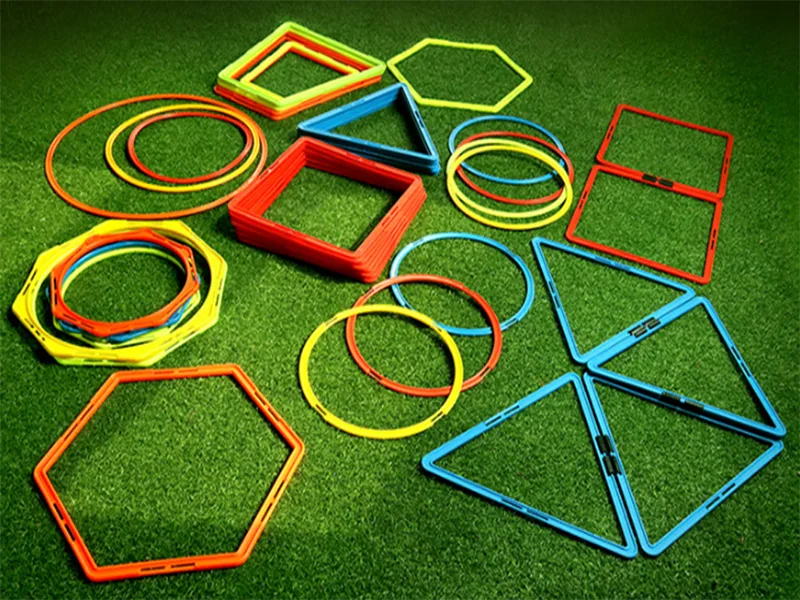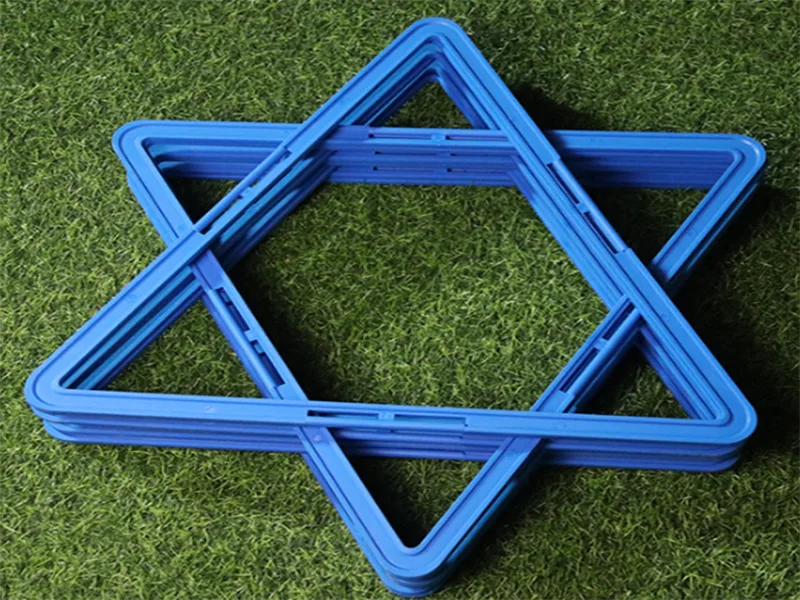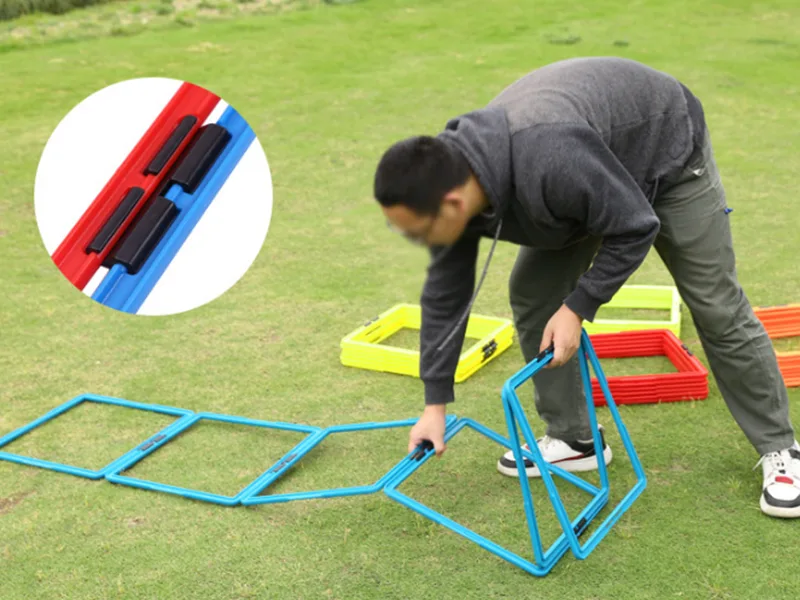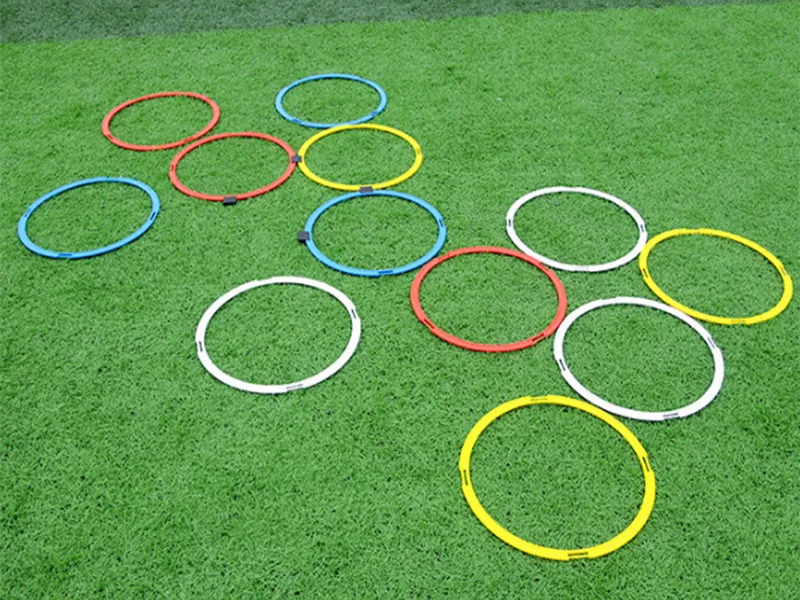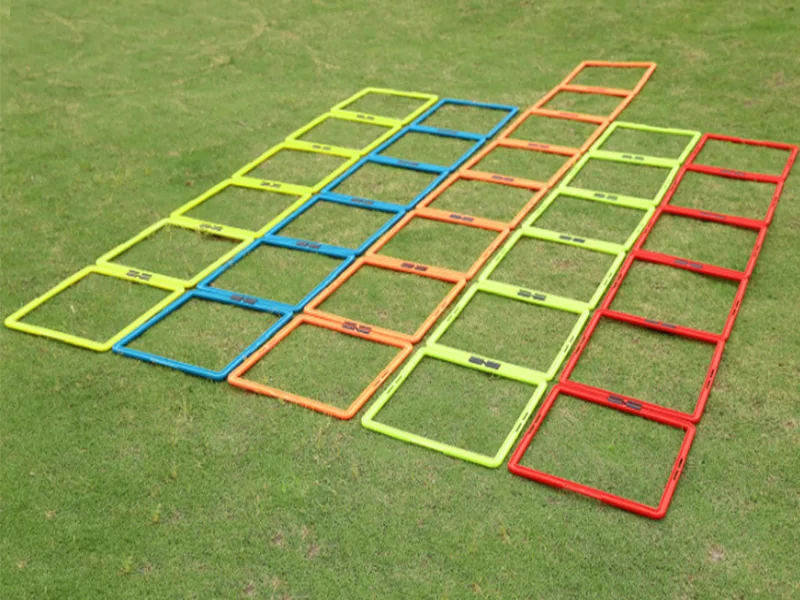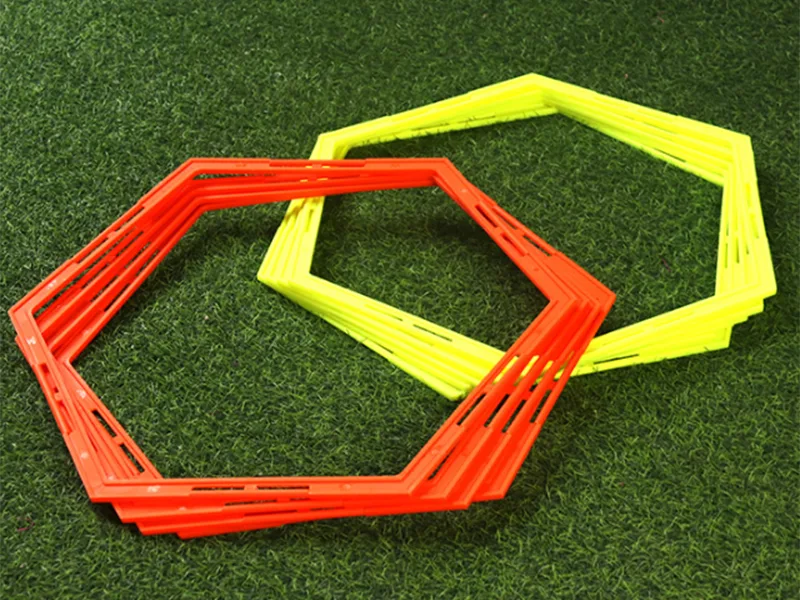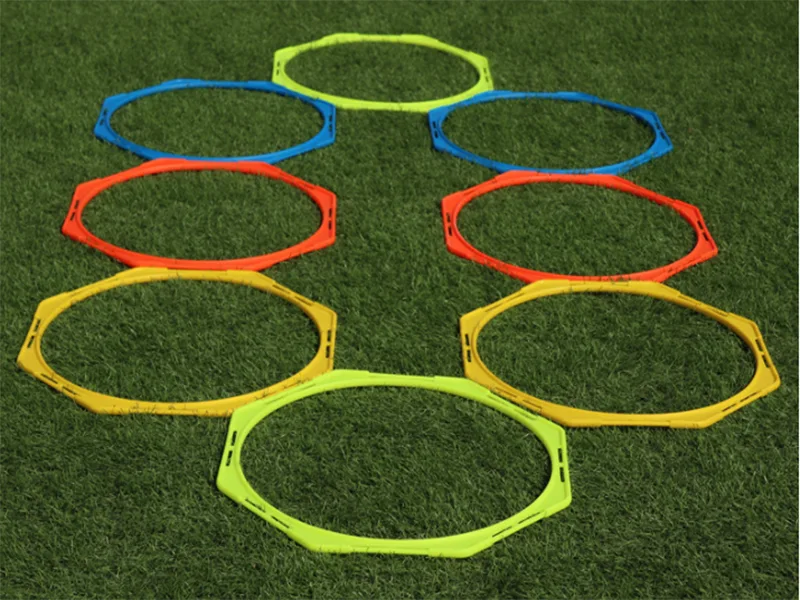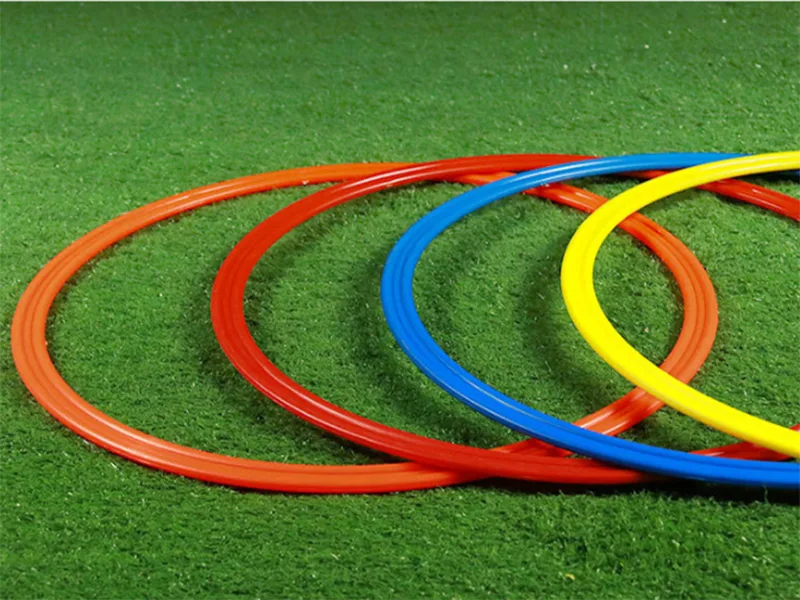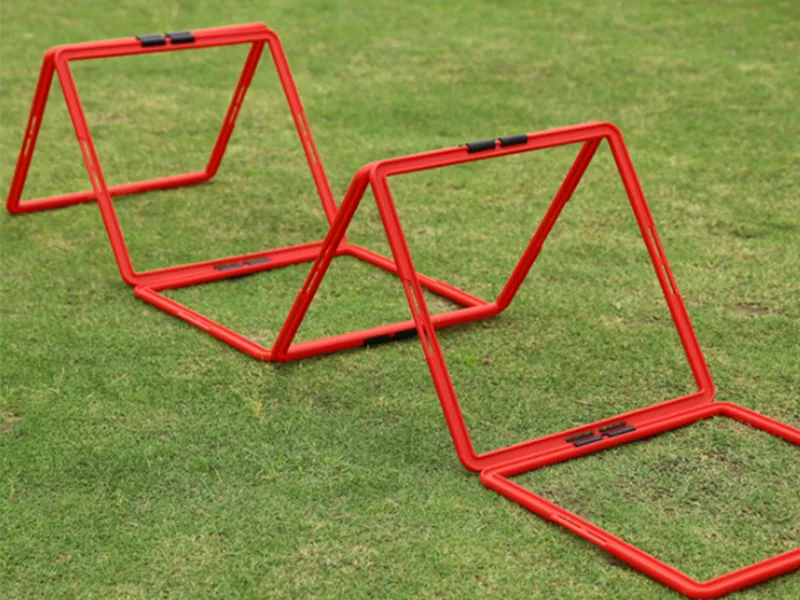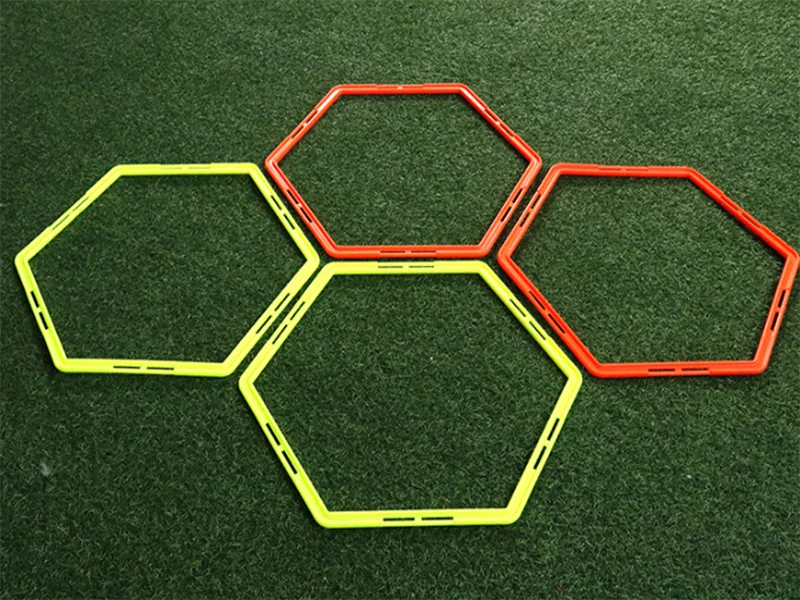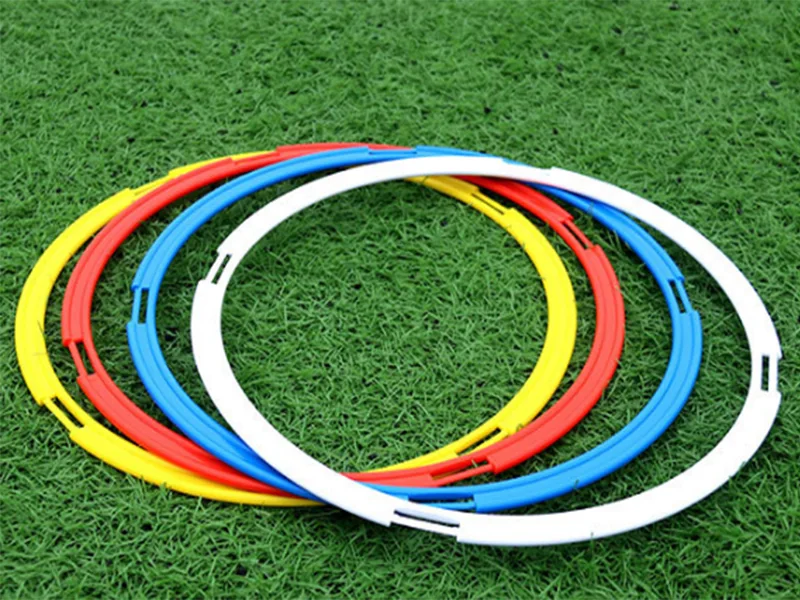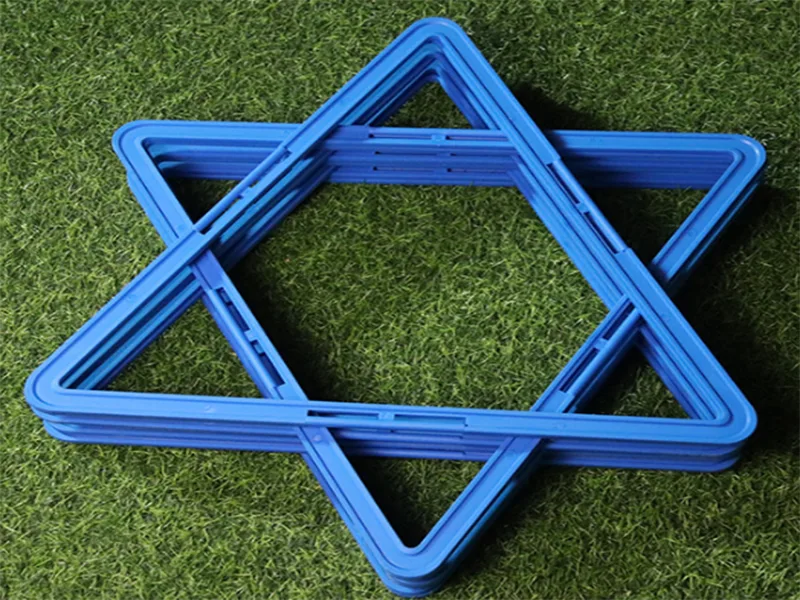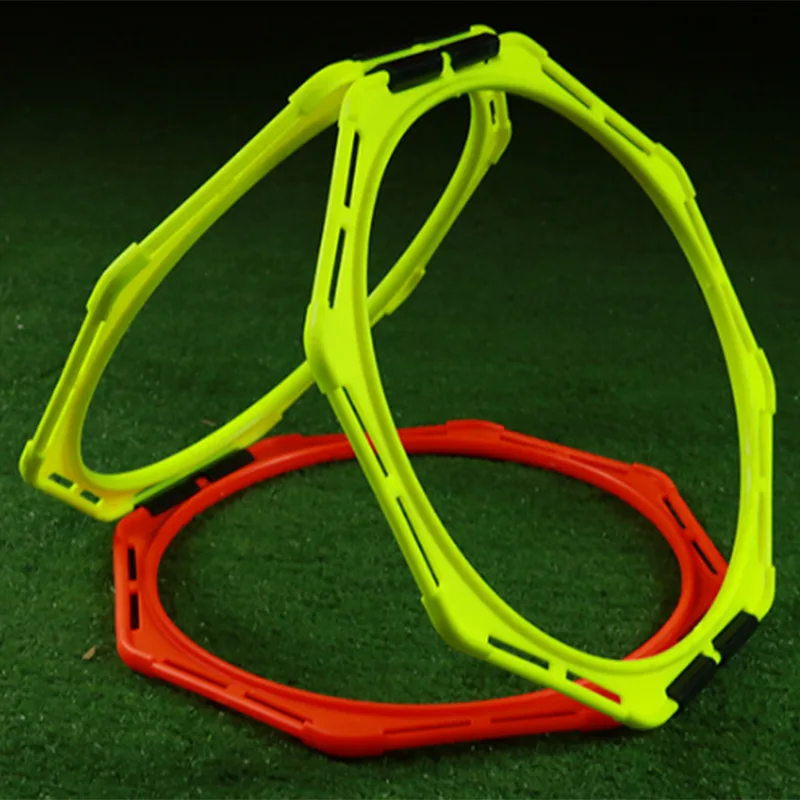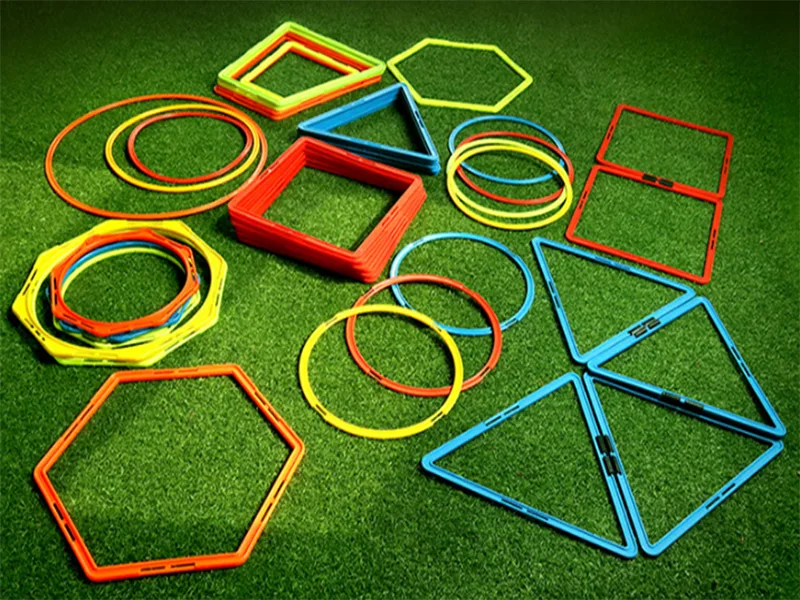
Soccer agility rings are flat, circular markers placed on the training ground to define foot placement zones. Unlike a fixed agility ladder, each ring is independent, so coaches can arrange them in any pattern — straight lines for quick taps, zigzags for lateral movement, grids for combination drills, or scattered layouts for reactive work. This freedom makes the rings a staple in football training from grassroots youth sessions to professional first-team preparation.
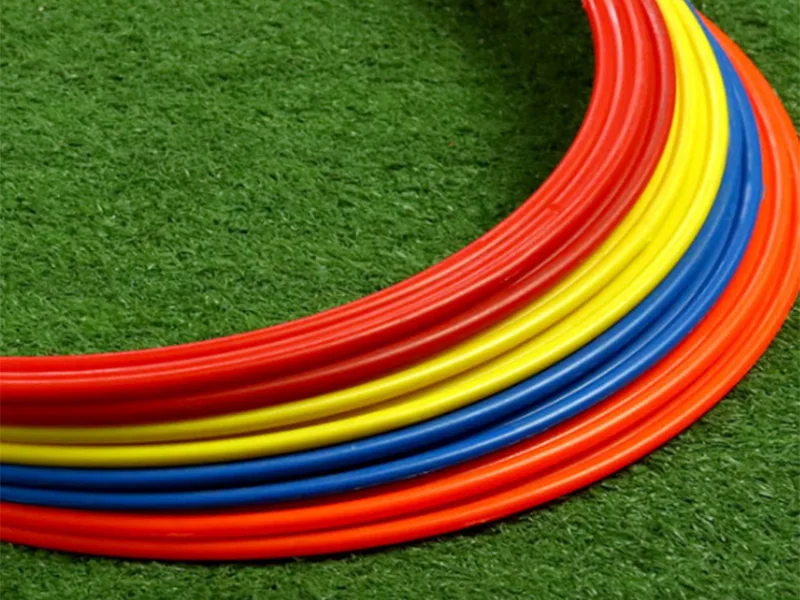
The rings are manufactured from high-quality PE plastic and supplied in bright, highly visible colors. They require no assembly: a coach or player simply places them on the surface and begins the drill. After the session, the rings nest together for compact storage and easy transport to the next pitch or gym.
The following features explain why football coaches select this ring model for repeated, high-volume training throughout a season.
1. Durable PE construction: The high-quality PE material resists compression, abrasion, and cracking. It retains its shape after repeated stepping, jumping, and ball-work drills, far outlasting thinner plastic alternatives.
2. Fade-resistant color: An environmentally friendly coloring process keeps the rings vivid under sun and rain. They do not yellow or darken quickly, so players can always see the target zone during fast drills.
3. Free-form layout: Rings can be spaced wide for acceleration work, close together for quick foot taps, or curved for dribbling patterns. A single set supports dozens of drill variations without additional equipment.
4. Smooth, safe edges: Deburred edges prevent scratches and snags during low dribbling and sliding movements. The non-toxic, odorless PE is safe for youth and adult players alike.
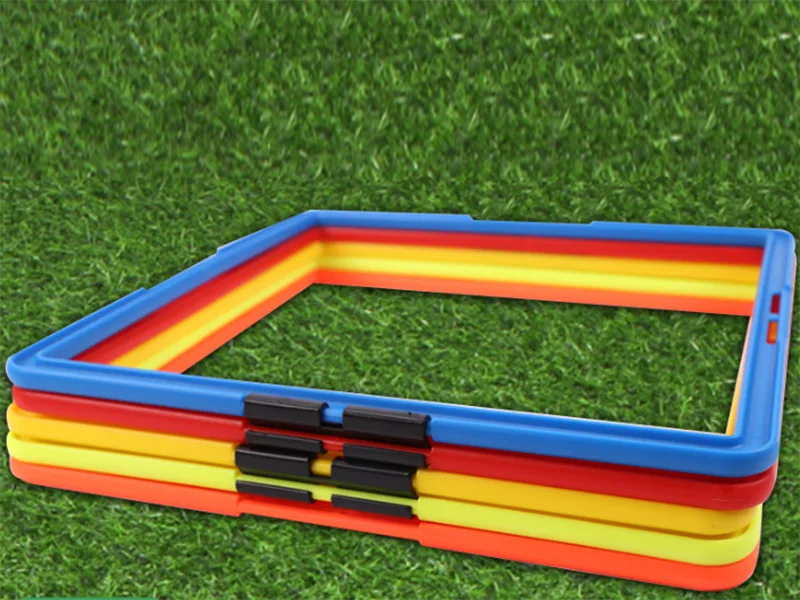
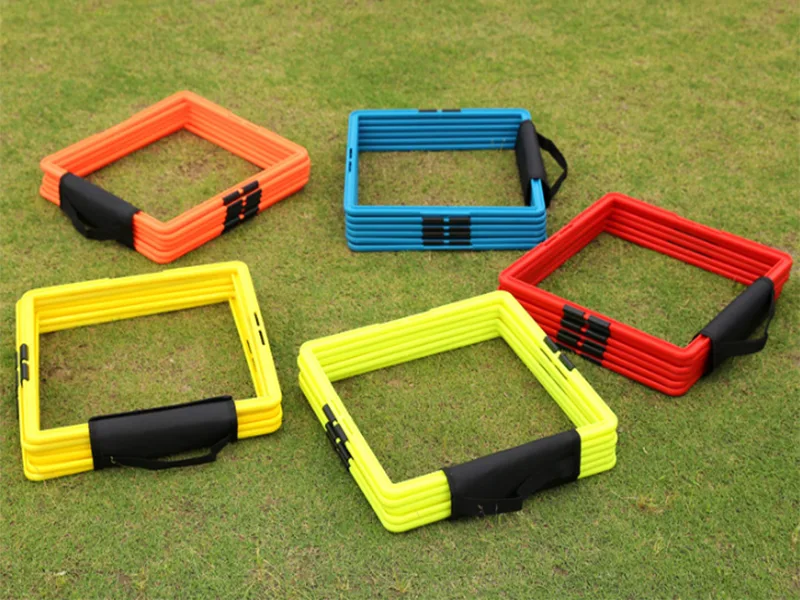
5. Stackable portability: Multiple rings nest into a slim stack that lifts with one hand. The set fits easily into a kit bag alongside cones, bibs, and balls for transport between training venues.
Together, these features make the rings a low-cost, high-versatility tool that football coaches can use every day without worrying about breakage, visibility, or setup time.
Football training uses the rings across several technical and physical focus areas. The examples below show how a single set integrates into a typical week of sessions.
Coaches place rings in curved or zigzag patterns and have players dribble through them using the inside, outside, and sole of the foot. The rings provide a visual reference for keeping the ball close and maintaining rhythm, which translates directly to tighter control in match situations where space is limited.
Grid arrangements of rings support fast in-out taps, two-footed hops, and crossover steps. Players train to shorten ground contact time and react to visual cues, improving the explosive first step needed to beat a defender or create passing space.
Scattered ring layouts challenge players to decelerate, pivot, and accelerate in new directions. This builds the ankle and knee stability required for sharp cuts, sidesteps, and turning away from pressure — movements that occur constantly in football matches.
For younger players, the bright colors and simple format make footwork training feel like a game rather than a chore. Coaches use color-coded rings to run relay races, pattern-following games, and basic balance exercises that build coordination and a love for training early on.
The table below summarizes the confirmed product information available from the factory. For custom dimensions, weights, or set configurations, buyers can contact the factory directly, as OEM and ODM orders are supported.
| Attribute | Details |
|---|---|
| Material | High-quality PE (polyethylene) |
| Color Options | Multiple bright, fade-resistant colors; custom colors available via OEM |
| Shape | Circular flat ring |
| Suitable Surfaces | Grass, artificial turf, gym floor, asphalt |
| Target Sports | Soccer, basketball, rugby, fitness, PE, rehabilitation |
| Edge Finish | Smooth, deburred, burr-free |
| Safety | Non-toxic, odorless, eco-friendly |
| Storage | Stackable / nestable |
| Assembly | None — ready to use out of package |
| Certifications | NSCC, GS, CE, CPSIA, ASTM, PROP, BSCI |
| Customization | OEM / ODM: custom logo, color, size, packaging |
| Packaging | Standard or custom polybag, gift box, display box |
All specifications are verified through the factory's 3 inspection lines, and each shipment includes an inspection report with individual product photos for buyer confirmation.
Football equipment buyers can choose from many suppliers, but several factors set JINLANGTE apart in terms of product consistency, customization depth, and long-term reliability.
1. 15 years of football-focused manufacturing: The factory has specialized in sports and leisure equipment for over 15 years, with football training gear — including rings, cones, ladders, hurdles, mannequins, and rebound boards — as a core category. This depth means production teams understand how football equipment is actually used and what durability standards it must meet.
2. In-house design and customization: 10 product designers provide turnkey design solutions for customer orders. After confirmation, high-resolution images are supplied to help update product listings. Custom logos, colors, sizes, and retail packaging are all handled in-house rather than outsourced.
3. Systematic quality control: Rather than relying on a small QC team alone, the factory involves 100% of production workers in quality control. A dedicated QC team inspects every product against the customer's own Standard Operating Procedures, and every shipment comes with an inspection report and product photos.
4. Market-ready certification: Products hold NSCC certification and meet GS, CE, CPSIA, ASTM, and PROP standards for export. The factory has passed BSCI, and all materials are eco-friendly. The team is familiar with REACH (Europe), state-level heavy-metal rules (USA), and SASO (Saudi Arabia), so production aligns with destination-market regulations from the start.
5. One-stop football equipment sourcing: Buyers can source rings, cones, ladders, hurdles, mannequins, goals, nets, and referee supplies from a single factory, consolidating orders, reducing shipping complexity, and ensuring color and quality consistency across a full training kit.
These differences add up to a supplier that can support a football club, school district, or retail brand season after season with dependable products and responsive communication.
Several ring-style training markers exist on the market, but this model stands out in how it compares to common alternatives. The following points summarize the practical differences buyers and coaches notice in real training use.
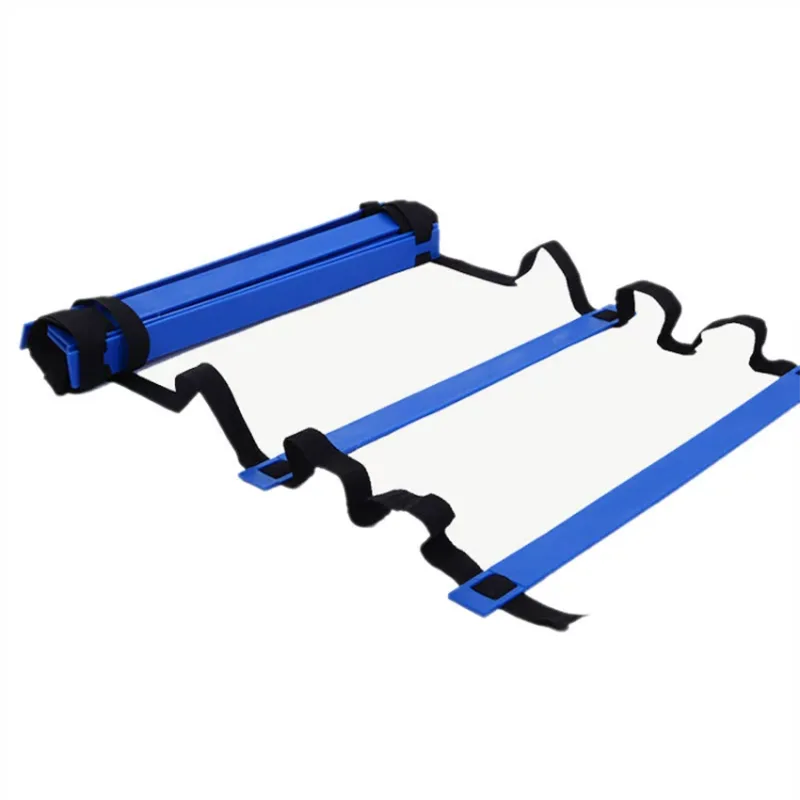
1. vs. fixed agility ladders: A standard ladder has fixed rung spacing, which limits drill variety. Soccer agility rings are independent units that can be arranged in straight lines, curves, grids, or scattered patterns. Coaches change the drill in seconds by repositioning the rings, without adjusting straps or connectors.
2. vs. thin recycled-plastic rings: Many low-cost rings use recycled PE blends that become brittle, develop stress whitening, and crack within weeks of daily use. This model uses high-quality PE selected for compression and abrasion resistance, so it retains its circular shape after repeated stepping, jumping, and stacking across full seasons.
3. vs. flat marker discs: Marker discs are solid circles that provide a target point but no defined foot zone. The ring's hollow center gives athletes a clear boundary to step into, out of, or around, making foot placement more precise and feedback more immediate during dribbling and footwork drills.
4. vs. single-color sets: Many suppliers offer only one or two colors. This product is available in multiple bright, fade-resistant colors, allowing coaches to separate training groups, mark different drill stations, or run color-coded pattern games within a single session.
5. vs. rings that fade quickly: Cheaper coloring processes yellow and darken after outdoor exposure, reducing visibility during fast drills. The eco-friendly coloring process used here keeps the rings vivid under sun and rain, so the target zone stays clearly visible for longer.
These differences are most visible over a full season of daily use: the rings remain bright, intact, and adaptable, while lower-grade alternatives often need replacement mid-season and offer less training variety from the start.
A few simple practices keep the rings safe and extend their usable life on the training ground.
1. Pre-session check: Inspect each ring for cracks, sharp edges, or deformation before use. Remove any damaged ring to prevent tripping or scratching during drills.
2. Cleaning: Wipe with a damp cloth after outdoor use to remove dirt and grass stains. Avoid harsh chemicals that could degrade the plastic or fade the color.
3. Storage: Keep rings stacked in a dry area. While PE tolerates sun and rain, indoor storage preserves color brightness and prevents warping from extreme temperature changes.
4. Surface use: Place on flat, even surfaces. On very smooth gym floors, a non-slip mat underneath can improve stability during high-intensity lateral movements.
Following these steps ensures every training session starts with equipment that is clean, intact, and ready for safe, high-quality footwork work.
A: The Soccer agility rings are made of high-quality PE (polyethylene), which is durable, compression-resistant, non-toxic, and odorless. It is suitable for both indoor and outdoor use and retains its shape after repeated stepping and stacking.
A: Yes. The rings work on grass, artificial turf, gym floors, and asphalt surfaces. The flat design sits securely on most even surfaces, and the fade-resistant coloring holds up under outdoor sun and rain.
A: On very smooth indoor surfaces, the rings may shift slightly during high-intensity lateral drills. For maximum stability, place a non-slip mat underneath or use the rings on surfaces with more grip, such as rubberized gym flooring or turf.
A: Yes. The PE material is non-toxic and odorless, and the edges are smooth and burr-free, making them safe for supervised use by children and teenagers in school PE and youth football programs.
A: Wipe the rings with a damp cloth to remove dirt and stains. Avoid harsh solvents. Store them stacked in a dry area when not in use to preserve color brightness and prevent warping from extreme temperatures.
A: Absolutely. While designed with football footwork in mind, the rings work equally well for basketball, rugby, tennis, fitness conditioning, physical education, and rehabilitation training. Any sport that benefits from foot speed, balance, and coordination drills can use them.
A: It depends on the drill and group size. A basic individual footwork circuit uses 6 to 12 rings, while a full squad session with multiple stations may require 20 or more. The factory supports custom set quantities and can advise based on your program size.
A: Yes, the rings are available in multiple bright, fade-resistant colors. Custom colors are also available through OEM service. Using two or three colors helps coaches separate groups or mark different drill stations in the same session.
Address
Zhujiazhuang, Fenghui Town, Shaoxing City, Zhejiang Province, China
Tel