In the landscape of modern athletic training, few tools offer the versatility and effectiveness of Agility Rings. These portable, durable, and highly adaptable training implements have revolutionized how athletes across multiple disciplines develop footwork, coordination, reaction time, and explosive power. This comprehensive article explores the design, applications, and training methodologies associated with this essential equipment. From foundational footwork drills to advanced plyometric exercises, the discussion covers the full spectrum of training possibilities. The article examines the material composition, dimensional specifications, and color-coding systems that make these rings effective for both individual and team training environments. Comparative analysis with traditional agility ladders reveals the unique advantages of ring-based training, particularly in multi-directional movement development. Practical guidance on drill progression, session structure, and sport-specific applications ensures that coaches, trainers, and athletes can immediately implement these tools in their programs. The content also addresses maintenance, safety considerations, and the integration of agility ring training with other modalities. By the end of this exploration, readers will possess a thorough understanding of how this simple yet sophisticated training tool can elevate athletic performance across all levels of competition.
- 1. The Evolution of Agility Training Equipment
- 2. Understanding the Design and Construction of Agility Rings
- 3. Foundational Footwork Drills for Beginners
- 4. Advanced Drills for Elite Athletic Performance
- 5. Sport-Specific Applications and Training Protocols
- 6. Agility Rings Versus Traditional Agility Ladders
- 7. Designing Effective Training Sessions with Agility Rings
- 8. Maintenance, Durability, and Safety Considerations
- 9. Integrating Agility Rings with Other Training Modalities
- 10. Conclusion
1. The Evolution of Agility Training Equipment
The pursuit of athletic excellence has always driven innovation in training equipment. From the earliest days of organized sport, coaches and athletes have sought tools that could enhance speed, coordination, and reactive ability. The Agility Rings represent a significant advancement in this ongoing evolution, offering capabilities that traditional training implements cannot match.
Historically, agility training relied heavily on cones, markers, and lines painted on fields. While functional, these methods lacked the versatility and engagement that modern athletes require. The introduction of agility ladders in the late twentieth century provided a structured approach to footwork training, but their linear configuration limited the variety of movement patterns that could be practiced. Athletes needed a tool that could accommodate multi-directional movement, lateral agility, and complex footwork patterns.
This need gave rise to the development of individual training rings that could be arranged in countless configurations. The Agility Rings allow coaches to create custom training grids that challenge athletes in ways that linear ladders cannot. Whether arranged in straight lines, zigzag patterns, circular formations, or random configurations, these rings provide endless possibilities for creative training design.
Today's agility rings are manufactured from high-quality materials that withstand intense training sessions while remaining portable and easy to store. Their flat design ensures stability on various surfaces, from grass fields to indoor gym floors. The development of color-coded systems has further enhanced their utility, allowing coaches to designate specific drills, difficulty levels, or movement patterns through visual cues.
As sports science continues to advance, the role of agility training in athletic development has become increasingly recognized. Research has demonstrated that agility ring training can be more effective than traditional ladder drills in improving certain athletic performance metrics. This evidence has accelerated the adoption of agility rings across multiple sports and training environments.
2. Understanding the Design and Construction of Agility Rings
The effectiveness of any training tool depends largely on its design and construction quality. Agility Rings are engineered to meet the demanding requirements of professional training environments while remaining accessible for recreational use.
Material Composition
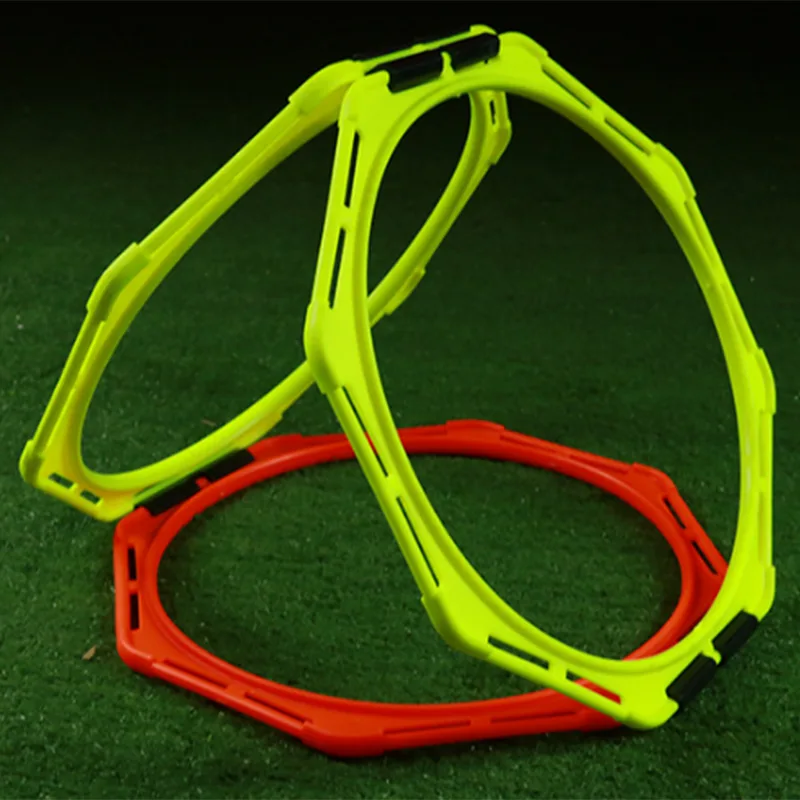
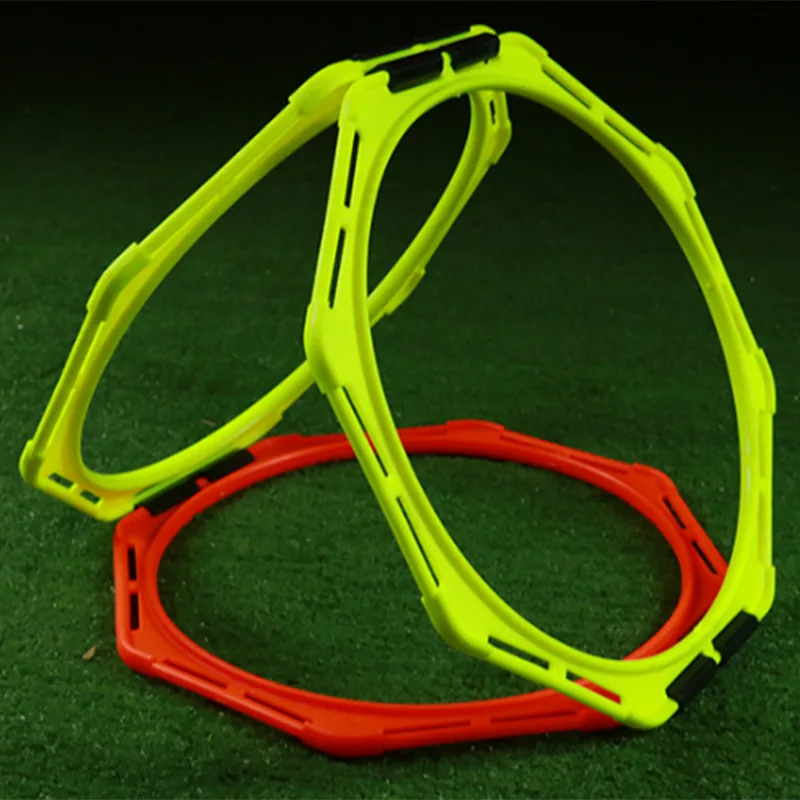
Premium agility rings are constructed from high-grade polypropylene (PP) or durable polyethylene materials. These materials offer excellent resistance to impact, abrasion, and environmental degradation. The smooth surface finish prevents snagging and ensures consistent performance across different training surfaces.
Dimensional Specifications
Standard agility rings typically feature diameters ranging from 40cm to 70cm, accommodating various training applications. The 15-18 inch (approximately 38-46cm) diameter is most common for footwork drills, while larger diameters support jumping and plyometric exercises.
Color-Coding Systems
Many agility ring sets incorporate multiple colors such as red, yellow, blue, and green. This color-coding enables coaches to designate specific drills, create visual progression paths, or assign different difficulty levels to different colors. The vibrant colors also enhance visibility on various playing surfaces.
Connectivity Features
Advanced agility ring systems include connecting clips that allow rings to be joined together in various configurations. This feature enables the creation of continuous ladders, obstacle courses, or custom training grids that can be easily modified between drills.
The flat profile of agility rings ensures stability during intense footwork drills, preventing unwanted movement or displacement. This stability is essential for maintaining the integrity of training patterns and reducing the risk of injury from slipping or misstepping. The rings are designed to lie flat on the ground, providing clear visual targets for athletes to navigate.
Durability is a hallmark of quality agility rings. They are engineered to withstand the repeated impact of athletes stepping, jumping, and pivoting on them during training sessions. The materials resist cracking, deformation, and color fading, ensuring that the rings maintain their effectiveness and appearance over extended periods of use. This durability makes them suitable for both indoor and outdoor training environments.
3. Foundational Footwork Drills for Beginners
For athletes new to agility ring training, establishing a solid foundation in fundamental footwork patterns is essential. These basic drills develop the neuromuscular coordination and movement efficiency that underpin more advanced exercises.
| Drill Name | Description | Primary Benefit |
|---|---|---|
| Single-Step Entry | Place one foot inside each ring in sequence, maintaining rhythm | Basic coordination and timing |
| Lateral Hop Series | Hop laterally from ring to ring, landing with both feet together | Lateral stability and leg strength |
| Alternating Touch | Touch the center of each ring alternately with left and right foot | Foot placement accuracy |
| Forward-Backward Shuffle | Move forward through the rings, then immediately reverse direction | Change-of-direction ability |
| Single-Leg Balance | Stand on one leg inside each ring for a designated count | Balance and proprioception |
| Ring Hopping Circuit | Hop through a series of rings arranged in a straight line | Explosive power development |
These foundational drills should be performed with emphasis on quality of movement rather than speed. Proper technique includes maintaining an athletic stance with knees slightly bent, staying on the balls of the feet, and keeping the head up and eyes forward. As athletes become more comfortable with these basic patterns, they can gradually increase the speed of execution while maintaining technical precision.
The simplicity of these drills makes them accessible to athletes of all ages and skill levels. Youth athletes can develop fundamental movement skills through playful engagement with the rings, while adult beginners can establish the movement patterns necessary for more demanding training. The visual nature of the rings provides clear feedback on foot placement, helping athletes develop spatial awareness and body control.
For coaches introducing agility rings to a group, these foundational drills serve as an excellent warm-up activity. They raise core temperature, increase heart rate, and prepare the neuromuscular system for more intense training. The progressive nature of the drills allows athletes to build confidence while developing the athletic attributes that transfer to their specific sports.
4. Advanced Drills for Elite Athletic Performance
As athletes progress in their training, the complexity and intensity of agility ring drills must increase to continue driving adaptation. Advanced drills challenge athletes' coordination, reaction time, and explosive power in ways that directly translate to competitive performance.
Reaction-Based Drills
These drills incorporate external stimuli to challenge reactive ability. A coach or partner can call out color sequences or directional commands that the athlete must follow while navigating the rings. This develops the cognitive processing speed essential for competitive sports.
Plyometric Progressions
When agility rings are elevated using connecting clips, they become effective hurdles for plyometric training. Athletes perform bounding, depth jumps, and continuous hopping sequences that develop explosive leg power and reactive strength.
Multi-Directional Agility
Complex ring arrangements force athletes to execute rapid changes of direction in multiple planes of movement. These drills simulate the unpredictable movement demands of sports like basketball, soccer, and football.
Upper-Body Integration
Advanced drills incorporate upper-body movements such as medicine ball catches, dribbling, or partner interactions while navigating the rings. This develops whole-body coordination and the ability to maintain movement quality while executing sport-specific skills.
Elite athletes benefit from the progressive overload that advanced agility ring drills provide. By manipulating variables such as speed, complexity, and external load, coaches can create training stimuli that continuously challenge athletes' adaptive capacity. The versatility of the rings allows for virtually unlimited drill variations, preventing the adaptation plateau that can occur with less versatile training tools.
For sport-specific applications, advanced drills can be customized to replicate the movement patterns and decision-making demands of particular sports. Soccer players might navigate rings while controlling a ball, basketball players might combine ring drills with dribbling and shooting, and football players might execute ring-based footwork before engaging contact drills. This specificity enhances the transfer of training gains to competitive performance.
Advanced agility ring training also develops the mental attributes necessary for high-level competition. The concentration required to execute complex drills under fatigue builds mental resilience and the ability to maintain performance quality under pressure. Athletes learn to process information quickly, make split-second decisions, and execute precise movements in challenging conditions.
5. Sport-Specific Applications and Training Protocols
The versatility of Agility Rings makes them invaluable across a wide spectrum of sports. Each sport presents unique movement demands, and the rings can be configured to address these specific requirements.
Soccer and Football
- Quick-feet drills through ring ladders
- Change-of-direction patterns with ball control
- Reaction drills responding to visual cues
- Plyometric sequences for explosive acceleration
Basketball
- Defensive slide patterns through ring grids
- Dribbling sequences combined with footwork
- Rebound and landing mechanics
- Lateral quickness development
Tennis and Badminton
- Side-to-side movement patterns
- Split-step timing drills
- Recovery footwork after shots
- Multi-directional court coverage
Athletics and Track
- Acceleration mechanics
- Hurdle step patterns
- Change-of-direction for multi-event athletes
- Warm-up and activation routines
For team sports, agility rings enable efficient group training sessions where multiple athletes can work simultaneously on different stations. This maximizes training density and ensures that all athletes receive adequate repetition volume. The portability of the rings allows coaches to set up training circuits quickly and modify them between sessions based on specific objectives.
Individual athletes can also benefit from agility ring training during solo sessions. The clear visual targets provided by the rings allow for self-directed training with immediate feedback on foot placement and movement quality. Athletes can video their sessions for technical analysis or use timing devices to measure performance improvements over time.
The adaptability of agility rings extends to rehabilitation and injury prevention contexts. Physical therapists and athletic trainers use them to develop proprioception, balance, and movement confidence in athletes returning from lower-extremity injuries. The controlled environment of ring-based drills allows for graduated loading and progressive challenge as athletes regain function.
6. Agility Rings Versus Traditional Agility Ladders
While agility ladders have long been a staple of athletic training, agility rings offer distinct advantages that make them increasingly preferred by coaches and trainers. Understanding these differences helps practitioners select the most appropriate tool for their specific training objectives.
| Feature | Agility Rings | Agility Ladders |
|---|---|---|
| Configuration Flexibility | Unlimited custom arrangements | Fixed linear pattern |
| Movement Direction | Multi-directional | Primarily forward/backward |
| Training Variety | Virtually unlimited | Limited to ladder patterns |
| Elevation Capability | Can be raised for hurdles | Typically flat only |
| Visual Feedback | Individual ring targets | Linear rung spacing |
| Portability | Individual rings, easy to transport | Rolled ladder, bulkier |
| Durability | Rigid plastic, highly durable | Webbing/rungs may wear |
The most significant advantage of agility rings is their ability to support multi-directional training. While agility ladders confine athletes to linear movement patterns, rings can be arranged to challenge lateral, diagonal, and rotational agility. This mirrors the unpredictable movement demands of most sports more accurately than linear ladder drills.
Research has indicated that agility ring training may be more effective than ladder training for certain performance outcomes. The individual ring targets require athletes to make independent foot placements rather than following the constrained pattern of a ladder. This develops greater proprioceptive awareness and decision-making ability during movement execution.
The elevation capability of agility rings adds another dimension to training possibilities. When raised using connecting clips, the rings become low hurdles for plyometric and jumping exercises. This versatility eliminates the need for separate equipment, making agility rings a more space-efficient and cost-effective training solution.
7. Designing Effective Training Sessions with Agility Rings
The effectiveness of agility ring training depends largely on how sessions are structured and executed. A well-designed training session maximizes developmental benefits while minimizing injury risk and maintaining athlete engagement.
Warm-Up Phase
Begin with dynamic movements through the rings at low intensity. This raises core temperature, increases blood flow, and activates the neuromuscular system. Simple drills like single-step entries and lateral shuffles prepare the body for more demanding work.
Skill Development Block
Focus on specific technical elements such as footwork precision, change-of-direction mechanics, or reaction training. Emphasize quality of movement over speed, using video analysis or coach feedback to refine technique.
Conditioning Circuit
Incorporate agility ring drills into a conditioning circuit that challenges cardiovascular endurance and muscular stamina. Combine ring drills with other exercises such as sprints, jumps, or sport-specific skills.
Competitive Elements
Introduce timed challenges, relay races, or head-to-head competitions that increase intensity and engagement. These elements develop the ability to perform under pressure and maintain technique during fatigue.
Cool-Down and Recovery
Conclude with lower-intensity ring drills that promote recovery and reinforce movement patterns. Include balance exercises and static stretching to address any areas of tightness or imbalance.
The principles of progressive overload should guide session design. As athletes adapt to current training demands, the complexity, speed, or volume of drills should increase to continue driving improvement. This might involve more complex ring configurations, faster execution speeds, or the addition of external loads or sport-specific elements.
Variety is essential for maintaining athlete engagement and preventing adaptation plateaus. The virtually unlimited configurations of agility rings allow coaches to create new challenges each session. Changing ring arrangements, drill sequences, and training objectives keeps sessions fresh and maximizes developmental outcomes.
Individualization is also important. Athletes at different skill levels or with different training objectives may require modified drills or progression paths. The versatility of agility rings allows coaches to easily adjust the difficulty of drills by changing ring spacing, configuration complexity, or execution speed.
8. Maintenance, Durability, and Safety Considerations
Proper maintenance of Agility Rings ensures their longevity and effectiveness while minimizing the risk of training-related injuries. Understanding the factors that affect durability and safety allows practitioners to maximize the value of their investment.
Cleaning Procedures
- Wipe rings with a damp cloth after use to remove dirt and sweat
- Use mild soap and water for deeper cleaning when necessary
- Avoid harsh chemicals that may degrade the material
- Allow rings to dry completely before storing
Storage Practices
- Store rings in a cool, dry location away from direct sunlight
- Avoid stacking heavy objects on top of the rings
- Keep connecting clips organized to prevent loss
- Consider using a storage bag for easy transport
Inspection Protocol
- Check for cracks, warping, or deformation before each use
- Inspect connecting clips for damage or wear
- Replace any damaged rings immediately
- Verify that rings lie flat on the training surface
Safety Guidelines
- Ensure training surface is clear of debris and obstacles
- Maintain adequate spacing between rings to prevent tripping
- Use appropriate footwear with good traction
- Progress drills gradually to prevent overuse injuries
The durability of quality agility rings makes them a reliable long-term training investment. High-grade polypropylene and polyethylene materials resist cracking, deformation, and environmental degradation. However, even the most durable equipment requires regular inspection and appropriate care to maintain optimal performance.
Safety considerations extend beyond equipment maintenance to include proper training practices. Athletes should be adequately warmed up before engaging in agility ring drills. Drills should be progressed gradually to allow for neuromuscular adaptation and to minimize the risk of acute or overuse injuries. Proper technique should be emphasized, with coaches providing feedback on movement quality and foot placement.
The training surface also affects both safety and equipment longevity. Rings perform best on flat, even surfaces such as grass, turf, or gym floors. Uneven or hard surfaces may increase the risk of injury and accelerate equipment wear. When used outdoors, rings should be cleaned after each session to remove dirt and debris that could scratch or degrade the material.
9. Integrating Agility Rings with Other Training Modalities
While agility rings are highly effective as a standalone training tool, their true potential is realized when integrated with other training modalities. This integration creates comprehensive training experiences that develop multiple athletic attributes simultaneously.
Strength Training Integration
Combine agility ring drills with resistance training to develop power and movement efficiency. Athletes can perform ring drills while wearing weighted vests, holding medicine balls, or using resistance bands. This develops the ability to generate force quickly while maintaining movement quality.
Sport-Skill Integration
Incorporate sport-specific skills into agility ring drills. Soccer players can dribble through ring configurations, basketball players can combine ring drills with ball-handling, and football players can execute ring-based footwork before contact drills.
Cardiovascular Conditioning
Design high-intensity interval training (HIIT) circuits that incorporate agility ring drills. These circuits challenge both the anaerobic and aerobic energy systems while developing agility and coordination.
Recovery and Rehabilitation
Use agility rings in rehabilitation settings to develop proprioception and movement confidence. The controlled environment of ring-based drills allows for graduated loading and progressive challenge as athletes return from injury.
The integration of agility rings with technology enhances training effectiveness and provides objective performance data. Athletes can use timing gates to measure speed through ring configurations, video analysis to review technique, and wearable sensors to track movement metrics. This data-driven approach enables precise training prescription and performance monitoring.
Group training environments particularly benefit from the integration of agility rings with other modalities. Coaches can establish multiple training stations, with some athletes working on ring drills while others engage in strength, power, or sport-specific training. This maximizes training density and ensures efficient use of training time.
The cognitive demands of integrated training should not be overlooked. Combining agility ring drills with other tasks develops the ability to maintain movement quality while processing additional information. This cognitive-motor integration is essential for competitive performance, where athletes must execute complex movements while making rapid decisions under pressure.
10. Conclusion
The Agility Rings represent a significant advancement in athletic training equipment, offering versatility, durability, and effectiveness that traditional tools cannot match. Their ability to support multi-directional movement, customizable configurations, and progressive training challenges makes them indispensable for coaches, trainers, and athletes across all levels of sport.
Throughout this comprehensive exploration, we have examined the design principles that make these rings effective, the foundational drills that build athletic foundations, and the advanced exercises that drive elite performance. The sport-specific applications demonstrate the versatility of the rings across diverse athletic disciplines, while the comparative analysis with agility ladders highlights their unique advantages.
The integration of agility rings with other training modalities expands their utility and creates comprehensive training experiences. From strength training integration to sport-skill development and cardiovascular conditioning, the rings serve as a versatile platform for holistic athletic development. The emphasis on proper maintenance and safety ensures that these valuable training tools remain effective over extended periods of use.
As sports science continues to evolve, the role of agility training in athletic development will only increase. The evidence supporting the effectiveness of ring-based training continues to accumulate, and the versatility of the equipment ensures its continued relevance across multiple sports and training contexts. For athletes seeking to improve their footwork, coordination, and reactive ability, agility rings offer a proven and effective training solution.
The simplicity of the equipment belies its profound impact on athletic performance. By providing clear visual targets and unlimited configuration possibilities, agility rings enable athletes to develop the movement skills that separate good performers from great ones. Whether used in professional training facilities, school athletic programs, or home gyms, these rings deliver results that justify their place in any serious training program.
Shaoxing Jinlangte Sports Goods Co., Ltd. — Contact us