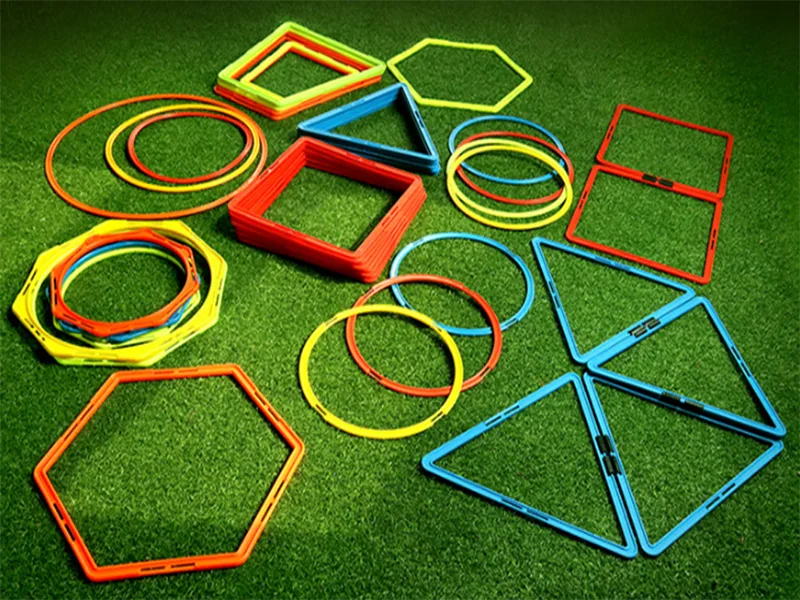
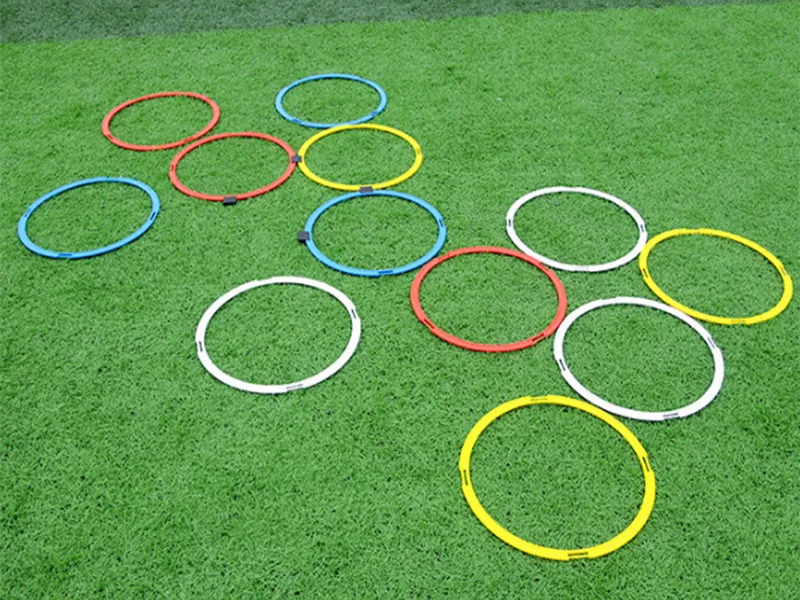
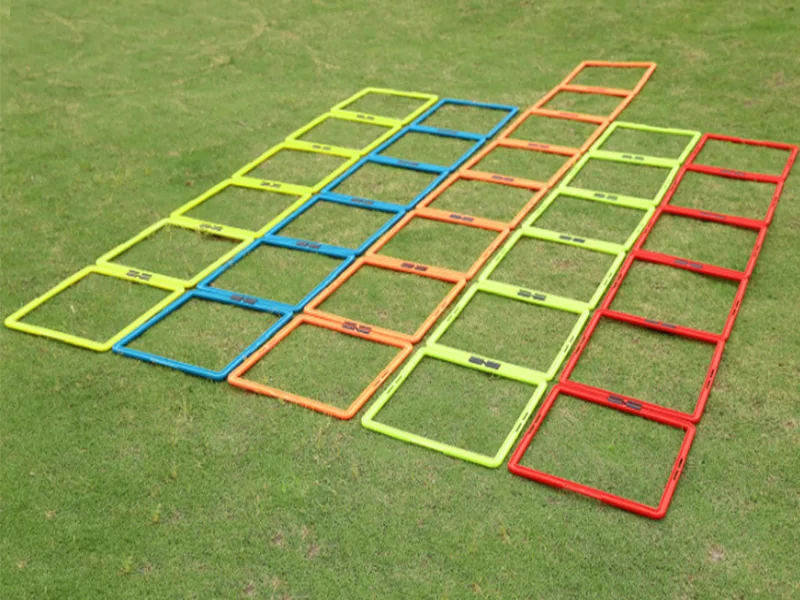
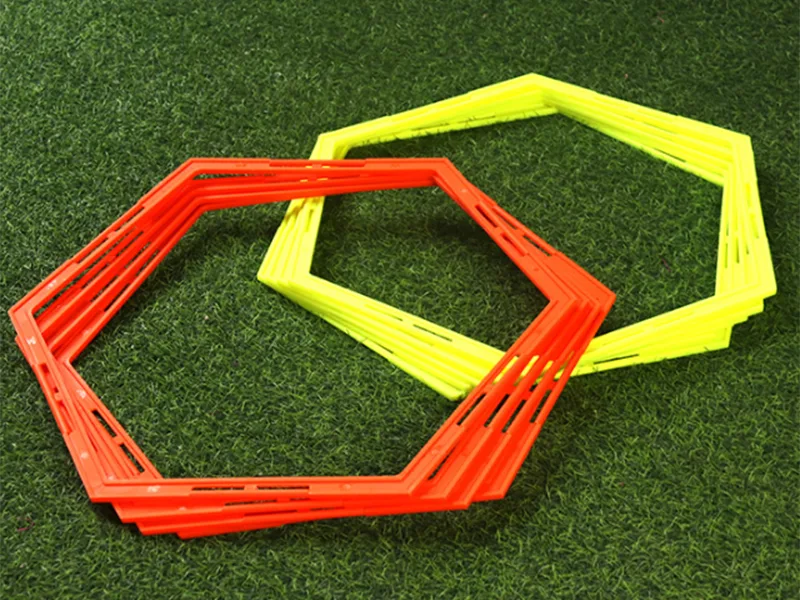
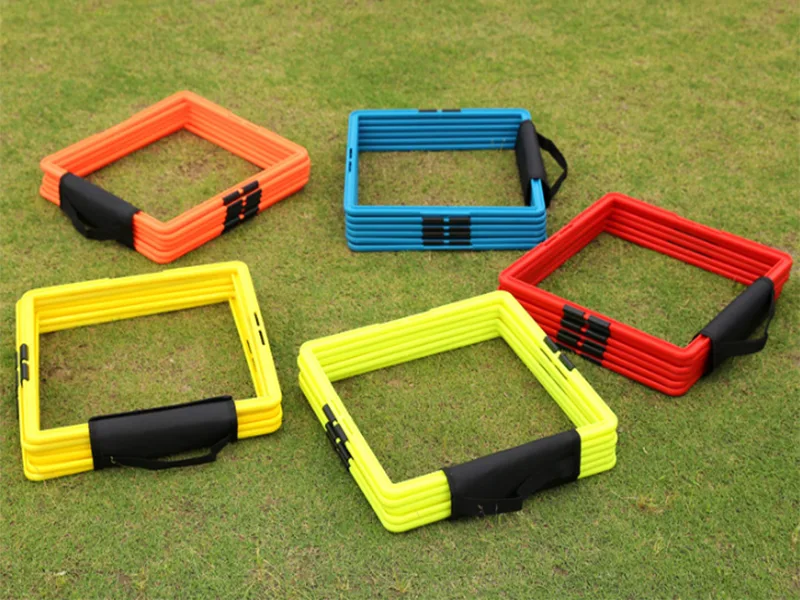
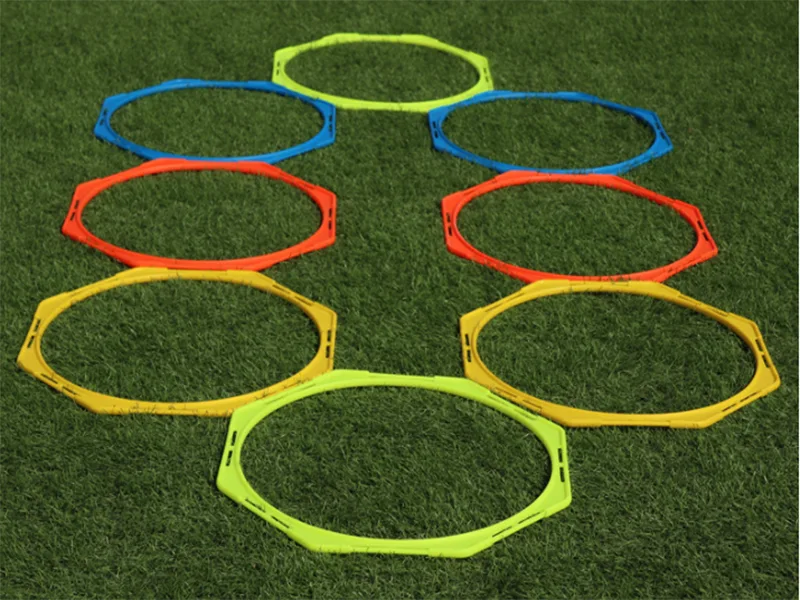
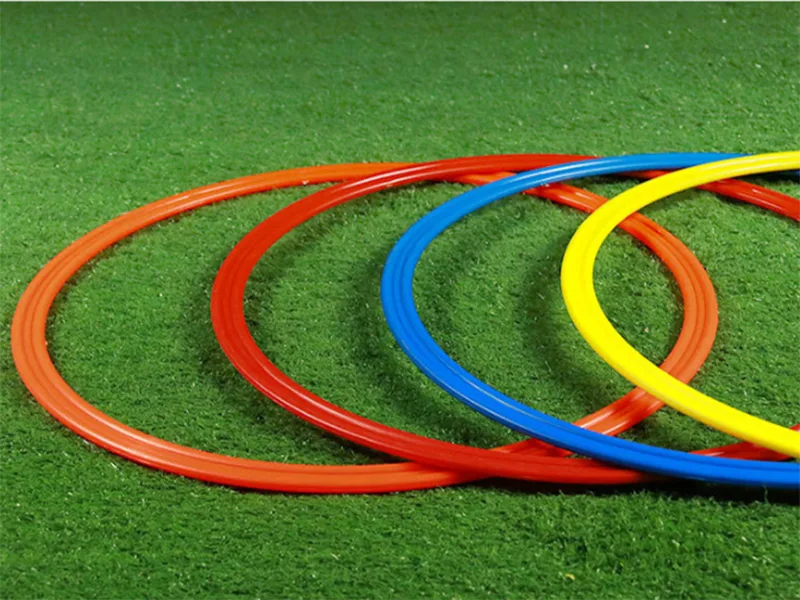
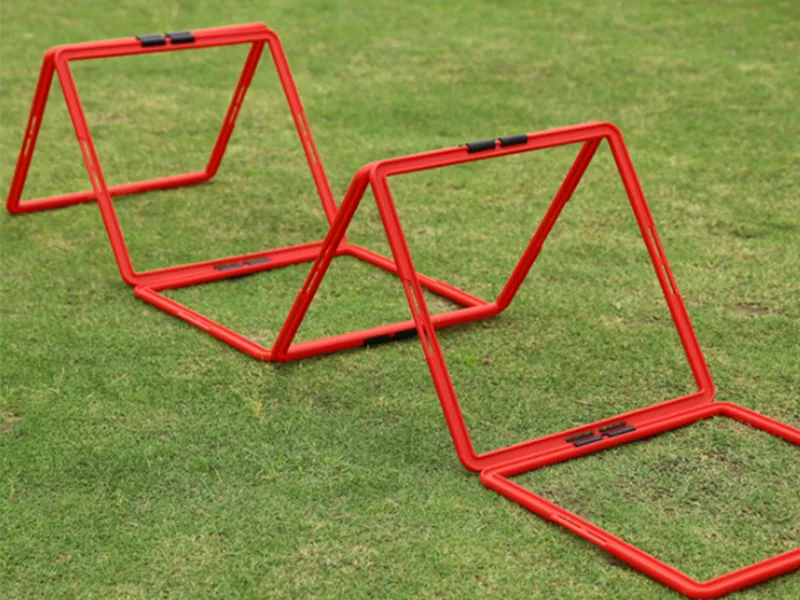
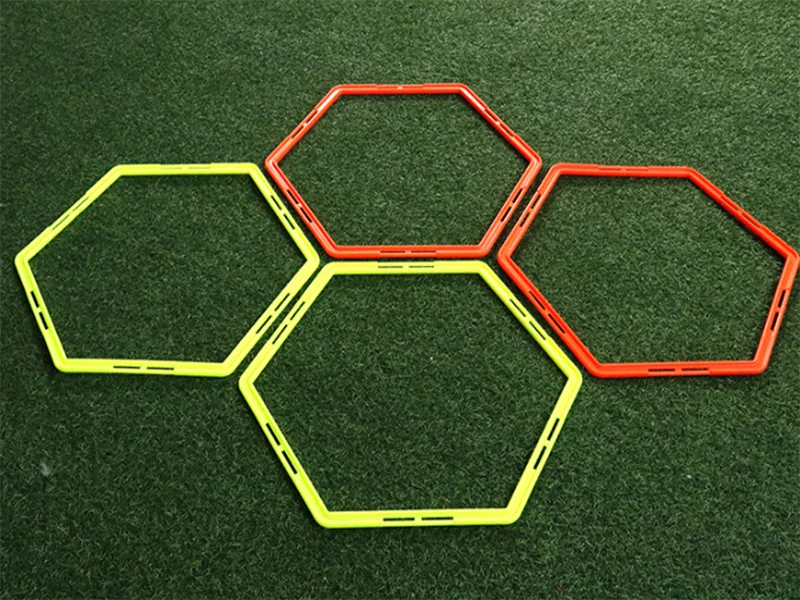
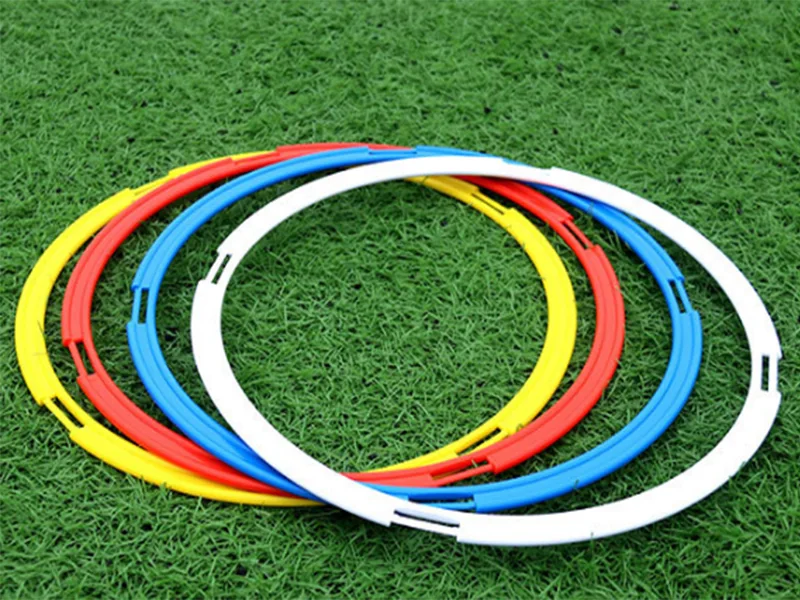
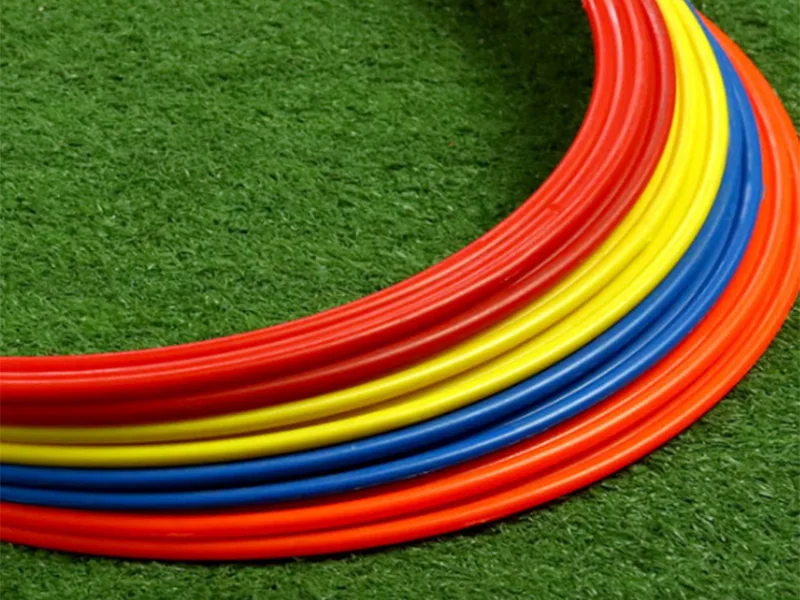
Polyethylene (PE) is one of the most widely used plastics in sports equipment because it balances flexibility, impact resistance, and chemical stability. Understanding why PE is chosen over other materials helps buyers evaluate quality and avoid cheaper alternatives that fail prematurely.
1. Natural flexibility with memory: PE flexes under pressure and returns to its original shape. When an athlete lands on the ring edge during a jump or lateral shuffle, the material absorbs impact rather than cracking. This spring-back property is why PE rings retain their circular form after seasons of repeated stepping and stacking.
2. Low moisture absorption: PE does not absorb water, so the rings do not become heavy, swollen, or slippery when used on wet grass or cleaned with water. This makes them suitable for outdoor training in variable weather and easy to sanitize between sessions.
3. Chemical inertness: Polyethylene is chemically stable and does not leach harmful substances under normal use. It is odorless and non-toxic, which is critical for equipment handled by children in school settings or used in enclosed indoor spaces where fumes would be noticeable.
4. Lightweight density: PE has a low density relative to harder plastics, so a full set of rings remains light enough to carry with one hand. This portability does not come at the cost of durability — the material's molecular structure provides strength without excess weight.
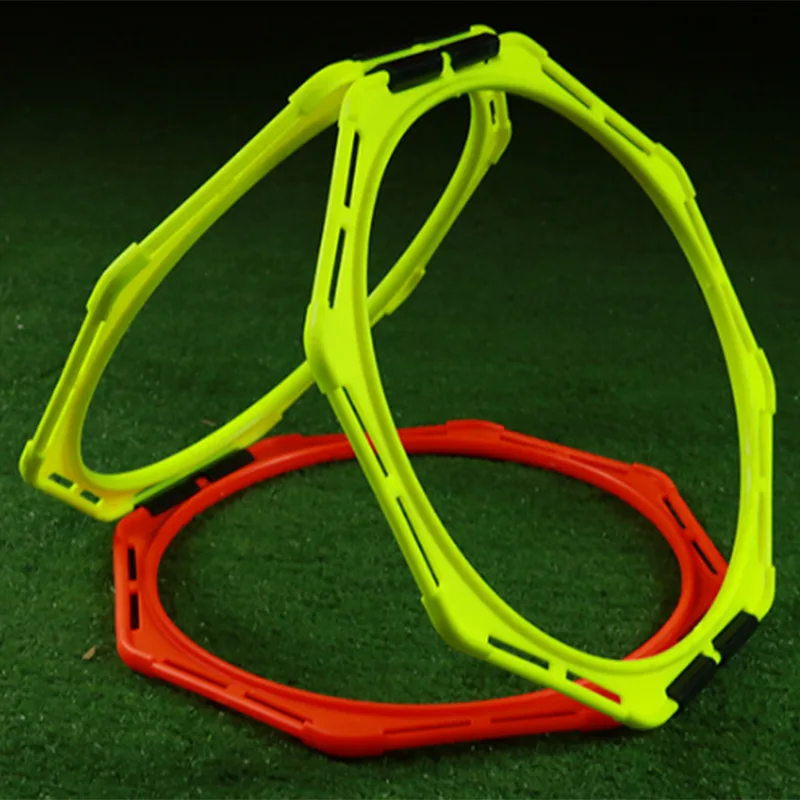
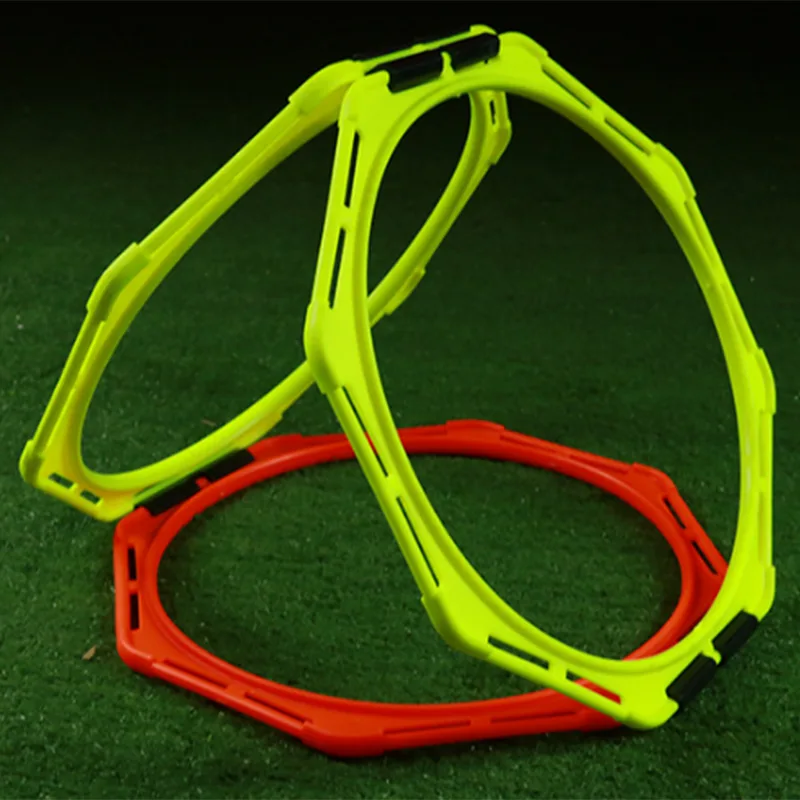
These material properties are why PE plastic agility rings have become a standard in football, basketball, and fitness training: they deliver the right combination of give, resilience, and safety for daily, high-volume use.
Not all training rings use the same material. Buyers comparing quotes should understand how PE stacks up against common alternatives, because the material directly affects lifespan, safety, and total cost over multiple seasons.
1. PE vs. PVC: PVC (polyvinyl chloride) is often cheaper but tends to be stiffer and more brittle, especially in cold conditions. PVC rings can crack when stepped on in low temperatures and may contain plasticizers that raise odor and flexibility concerns. PE remains flexible across a wider temperature range and is inherently non-toxic without added softeners.
2. PE vs. EVA foam: EVA foam rings are soft and lightweight but compress permanently under repeated impact. They lose their shape quickly, offer less defined foot-placement feedback, and can tear when dragged across rough surfaces. PE provides a firmer, more durable surface that maintains its structure and gives athletes clearer visual and physical boundaries during drills.
3. Virgin PE vs. recycled blend: Some suppliers use recycled PE blends to lower cost. Recycled material can contain inconsistent polymer chains, resulting in rings that are more brittle, less color-stable, and more prone to stress whitening. Virgin PE delivers predictable performance batch after batch, which is essential for buyers who need uniform quality across large orders.
4. PE vs. rubber rings: Rubber rings offer good grip but are heavier, bulkier, and more expensive. They also absorb moisture and can develop odor over time. PE rings are lighter, stack more compactly, and resist moisture absorption, making them more practical for coaches who transport equipment between venues.
For most training applications — from professional academies to school PE programs — PE offers the best balance of durability, safety, portability, and cost. Alternatives may save money upfront but typically require earlier replacement, which raises total cost over time.
Because training rings come into direct contact with skin and sportswear, and are often used by minors, material safety and environmental compliance are not optional. JINLANGTE's production and certification framework addresses both.
1. Non-toxic formulation: The PE material is odorless and free of harmful additives. It does not release strong chemical smells when unpacked or used in enclosed gyms, which is important for indoor training environments with limited ventilation.
2. Eco-friendly coloring: The coloring process uses environmentally friendly pigments that resist fading and do not contain heavy metals. This keeps the rings safe for handling and reduces environmental impact during production and disposal.
3. International product certifications: The factory's products hold NSCC certification, and export items meet GS and CE standards. For the North American market, compliance includes CPSIA, ASTM, and PROP. These certifications independently verify that material safety, chemical content, and physical performance meet recognized benchmarks.
4. Factory-level social and environmental compliance: The factory has passed BSCI certification, and all materials are described as eco-friendly. For the European market, the team is familiar with REACH chemical regulations; for the US, with state-level heavy-metal rules; and for Saudi Arabia, with SASO requirements. Buyers simply state their destination market and receive production aligned with local standards.
This layered approach — safe material, responsible coloring, third-party certification, and market-specific regulatory knowledge — gives buyers confidence that the rings will pass customs inspection and meet end-user safety expectations.
Material properties only matter if they translate to performance in actual training conditions. The following scenarios describe how the PE material holds up where it counts.
On grass and artificial turf, rings are exposed to UV sunlight, morning dew, and occasional rain. PE's low moisture absorption prevents swelling or warping, and the eco-friendly coloring resists yellowing and darkening. Unlike cheaper rings that fade to a dull, hard-to-see tone after a few weeks outdoors, these rings stay bright enough for athletes to identify the target zone during fast, high-intensity drills.
In gyms and training centers, rings may be used multiple times per day by different groups. The PE material withstands repeated stepping, jumping, and shuffling without developing stress cracks. The smooth, deburred edges do not scratch polished wood or rubberized gym floors, and the rings can be wiped clean quickly between sessions.
Rings are nested together for storage and carried between venues. PE's flexibility and memory mean the rings separate easily even after being stacked under weight, and they do not stick together or deform. A full set remains light enough for one-handed carrying, which reduces the physical burden on coaches and equipment managers.
PE remains flexible across a broad temperature range, unlike stiffer plastics that become brittle in cold weather. This means the PE plastic agility rings can be used for outdoor training in cooler seasons without cracking, and they do not soften excessively in direct summer sun.
The material's versatility makes the rings suitable across a range of environments and user groups, each with different demands on the plastic.
1. Football and sports academies: Daily outdoor sessions on grass and turf demand UV resistance and impact durability. The PE material holds up to back-to-back training blocks throughout a full season.
2. Schools and youth programs: Supervised use by children requires non-toxic, odorless material with smooth edges. The bright colors also help maintain engagement in PE classes and after-school clubs.
3. Fitness clubs and gyms: Indoor use on polished floors needs material that will not scratch surfaces or release odors. The rings are easy to sanitize and store compactly between group classes.
4. Rehabilitation and tactical training: Controlled stepping and balance exercises require stable, predictable ring placement. PE's flat, non-slip profile and consistent shape support precise movement patterns in clinical and high-intensity tactical settings.
Across all these settings, the common requirement is a material that is safe, durable, and low-maintenance — which is precisely why PE is the material of choice.
Material quality is only as reliable as the factory that processes it. JINLANGTE's quality system is designed to ensure that every ring leaving the factory meets the same material and finishing standard.
1. Factory-wide quality participation: Rather than relying on a small QC team alone, the factory involves 100% of production workers in quality control. This catches material and finishing issues at the source, before products move down the line.
2. Dedicated QC and inspection lines: A professional QC team inspects every product against the customer's own Standard Operating Procedures. The factory operates 3 inspection lines, which supports thorough checking even during high-volume production periods.
3. Shipment documentation: For every shipment, the factory provides an inspection report and individual product photos. These can be uploaded to a platform for buyer review and verification upon request, so buyers can confirm material and finish quality before goods leave the factory.
4. 15 years of material expertise: With over 15 years specializing in sports and leisure equipment, the factory has deep knowledge of which PE grades perform best for training products, which coloring processes resist fading, and which edge-finishing methods produce burr-free results.
This systematic approach means buyers receive consistent material quality across repeat orders — an important factor for clubs and retailers who need uniform products year after year.
A: PE is chosen because it is naturally flexible, non-toxic without added plasticizers, and resistant to cracking across a wide temperature range. PVC is often cheaper but can become brittle in cold conditions and may contain softeners that raise odor and safety concerns. PE delivers better long-term durability and safety for training equipment.
A: Yes. The PE material is odorless, non-toxic, and free of harmful additives. The edges are smooth and burr-free. The products comply with CPSIA, ASTM, and PROP standards for the North American market and hold NSCC, GS, and CE certifications, making them suitable for supervised use by children in school and youth programs.
A: PE remains flexible across a broad temperature range and does not become brittle like stiffer plastics. The rings can be used for outdoor training in cooler seasons without cracking, though extreme conditions outside normal training temperatures are not recommended for any plastic equipment.
A: No. The PE plastic agility rings use an environmentally friendly coloring process with pigments that do not contain heavy metals. The factory is familiar with REACH chemical regulations for Europe and state-level heavy-metal rules for the US, and production is aligned with destination-market requirements.
A: EVA foam is soft and light but compresses permanently under repeated impact, loses shape quickly, and can tear on rough surfaces. PE provides a firmer, more durable structure that maintains its circular form, gives athletes clearer foot-placement feedback, and lasts significantly longer under daily training use.
A: No. The PE material has smooth, deburred edges that will not scratch polished wood or rubberized gym floors. The rings are also lightweight enough that they do not gouge or indent soft surfaces during normal drill use.
A: PE is a widely recyclable plastic. The factory uses eco-friendly materials and coloring processes, and the rings can be processed through standard PE recycling channels at the end of their service life, reducing environmental impact.
Address
Zhujiazhuang, Fenghui Town, Shaoxing City, Zhejiang Province, China
Tel