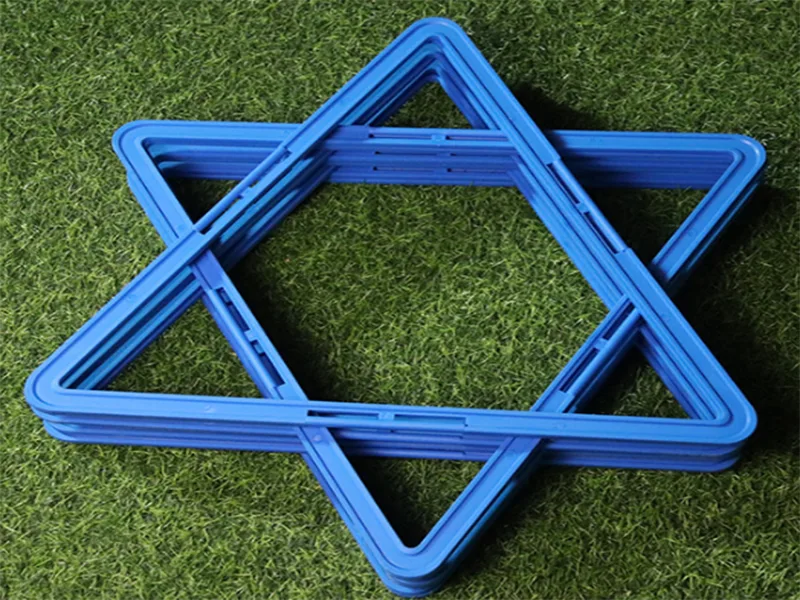
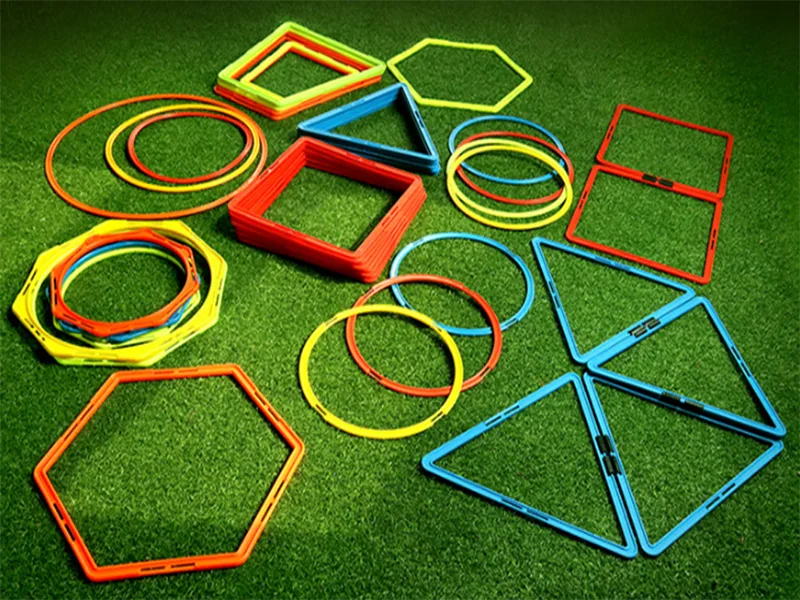
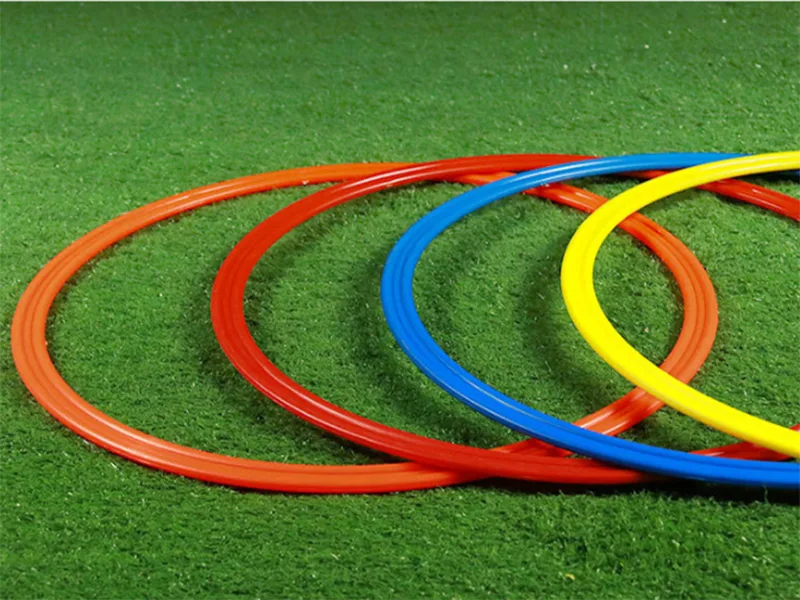
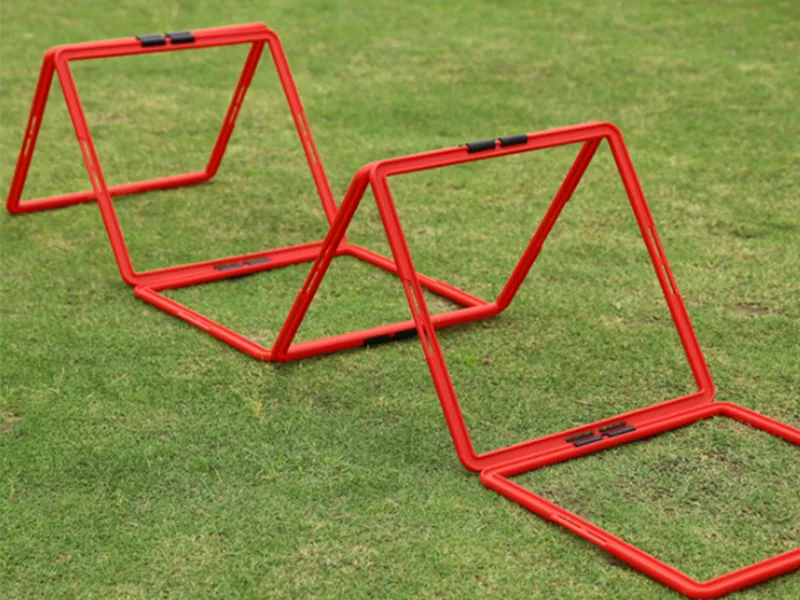
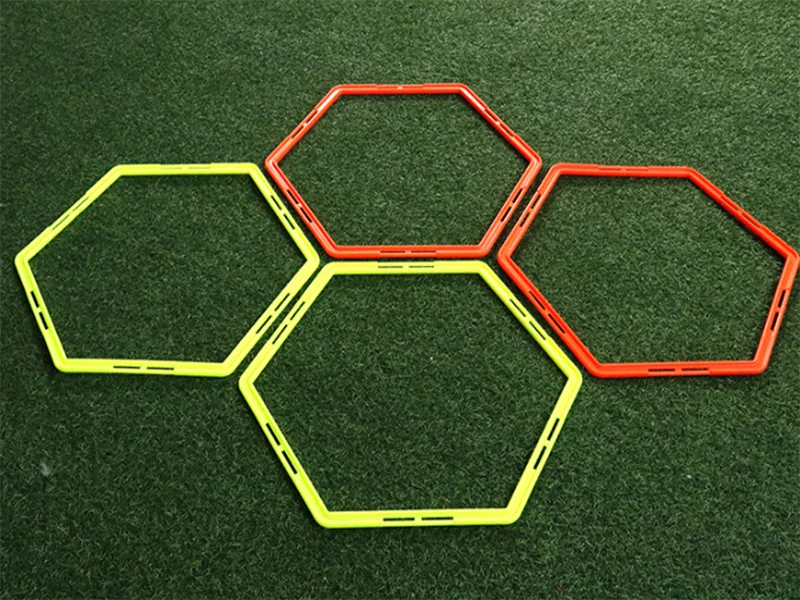
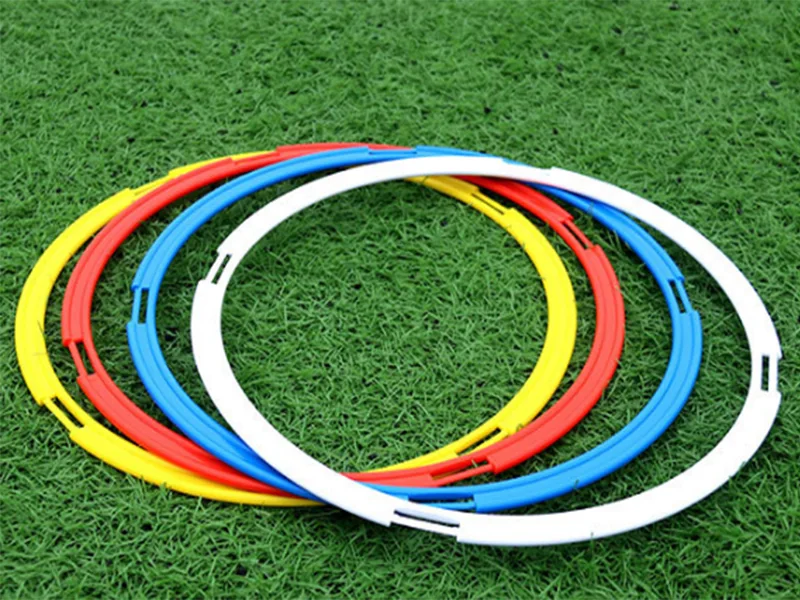
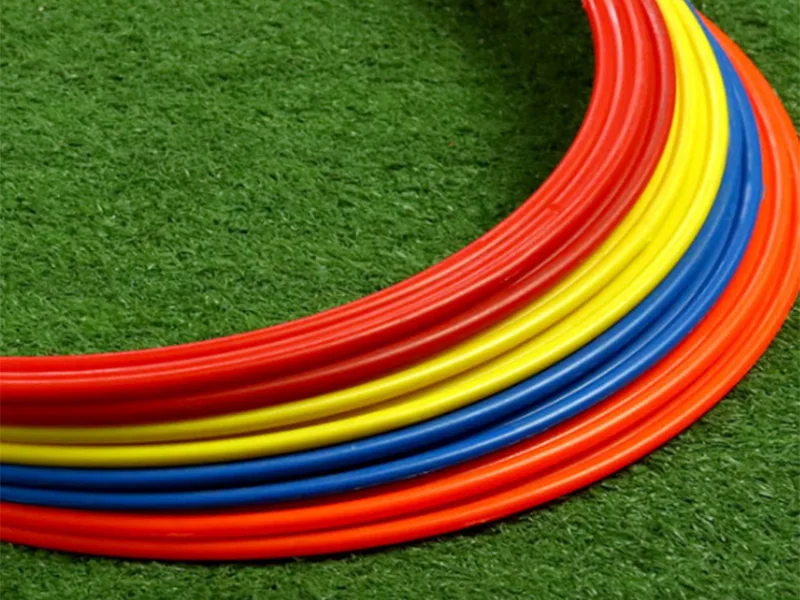
Most footwork problems aren't about effort — they're about feedback. Athletes run drills all day but never know exactly where their feet should land, so they practice sloppy movement and call it training. Agility Rings For Footwork And Movement Practice, made by Shaoxing Jinlangte Sports Goods Co., Ltd., a China factory with 15 years of sports equipment experience, fix that by giving every step a clear, visible target. The rings are PE plastic, bright enough to see at speed, and tough enough for daily use on grass, turf, or gym floors. Whether you're coaching a football academy, running a PE class, or training alone in the backyard, they turn open space into a structured movement session in seconds.
The principle is straightforward: when an athlete can see exactly where each foot should go, the nervous system starts wiring cleaner movement patterns automatically. You don't have to yell "shorter steps" or "get lower" every ten seconds. The ring does the coaching for you, and the athlete self-corrects just by trying to hit the target.
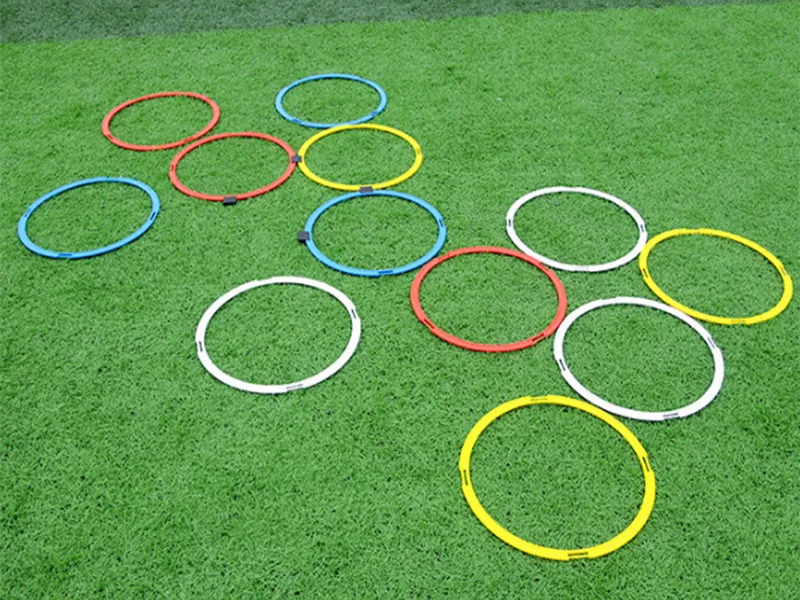
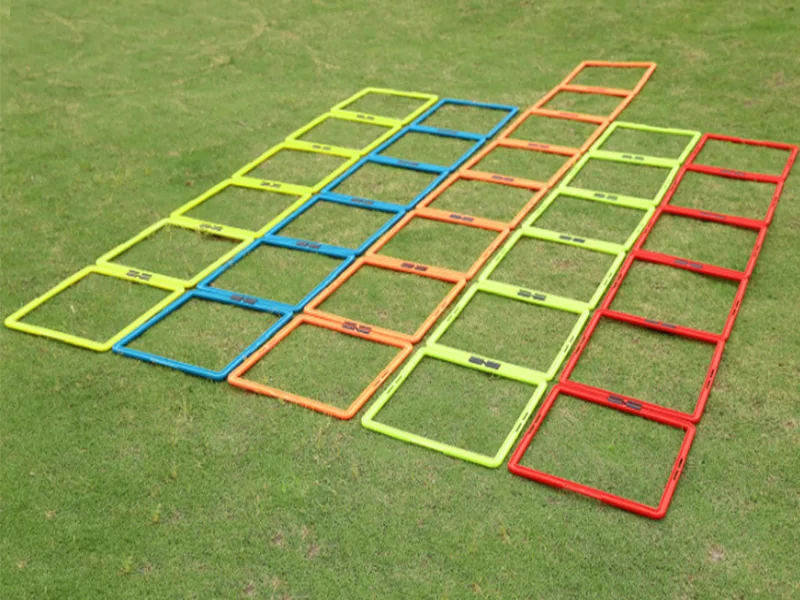
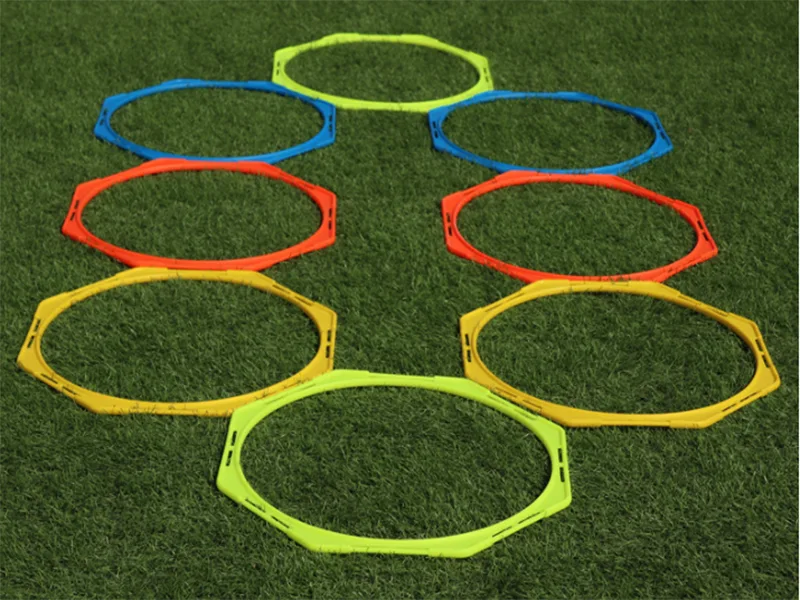
What makes rings more useful than a painted line or a ladder is that each one is a standalone zone. A ladder locks you into fixed spacing and a fixed direction. A ring can go anywhere — close together for fast taps, spread wide for explosive bounds, curved for dribbling patterns, scattered randomly for reactive work. You're not buying one drill; you're buying the ability to make any drill.
That flexibility matters because footwork isn't one skill. It's a collection of patterns — quick taps, lateral crossovers, single-leg balance, sharp deceleration — and each one needs a slightly different setup. The rings handle all of them without any extra equipment.
Here's what actually changes when athletes train with rings consistently. These aren't abstract fitness buzzwords — they're specific movement qualities that show up on the field or court.
Close-spaced rings train the feet to fire faster. Two-footed in-out taps, done at increasing tempo, shorten ground contact time. After a few weeks, the athlete's first step to the ball or to a defender is noticeably sharper because the body has learned to waste less time on the ground.
Side-to-side ring patterns force the hips and ankles to stabilize during crossover steps. This is the movement that breaks down most often when athletes get tired — they start crossing behind, reaching, or dragging the feet. Agility Rings For Footwork And Movement Practic give a clean visual reference for where the crossover foot should land, so the pattern stays clean even under fatigue.
Scattered ring layouts train the hard part of agility: stopping. Most athletes can accelerate; few can decelerate well enough to change direction without losing balance. Rings placed at irregular intervals force the athlete to read, slow down, pivot, and go again — exactly the demand of a match situation.
Holding a single-leg stance inside a ring, or doing slow taps from ring to ring on one foot, builds ankle stability and body awareness. This is the kind of training that reduces ankle sprains and knee issues over time, because the joint learns to stabilize itself without thinking.
You don't need a coaching certification to set up a good ring drill. Follow these basics and you'll get a safe, effective session every time.
1. Start with the goal, not the pattern: Decide what you're training — speed, balance, change of direction — before you place a single ring. A speed drill uses close spacing and fast tempo. A balance drill uses single-leg holds. A change-of-direction drill uses scattered, irregular placement.
2. Match spacing to ability: Beginners need rings closer together so they can succeed and build confidence. Advanced athletes need wider or more irregular spacing to stay challenged. If every rep looks easy, the rings are too close. If every rep looks messy, they're too far apart.
3. Progress in stages: Start slow and controlled, then add speed, then add a ball or a reaction cue. Skipping the slow stage is how athletes practice bad technique at high speed — which makes the bad technique stick.
4. Train both directions: It's tempting to only set up patterns that favor your strong side. Mirror every drill so the left and right sides get equal work. Imbalances are how injuries happen.
Keep sessions short and focused. Ten minutes of high-quality ring work beats thirty minutes of mindless repetition. The goal is clean movement, not exhaustion.
After years of watching coaches and athletes use training rings, a few mistakes show up over and over. None of them are about the product — they're about how it's used.
1. Placing rings too far apart: This is the most common error. When rings are too wide, athletes stop doing footwork and start doing long jumps. The drill becomes a leg-power exercise, not a foot-speed exercise. For quick-foot drills, rings should be close enough that the athlete never fully extends the legs between steps.
2. Only training forward movement: Real sport happens in every direction. If every ring pattern runs straight ahead, the athlete gets great at going forward and terrible at going sideways or backward. Set up lateral, backward, and rotational patterns at least as often as forward ones.
3. Ignoring the deceleration phase: Everyone wants to train the explosive part. But the ability to stop, control, and redirect is what separates athletes who move well from those who just move fast. Include drills where the athlete must land in a ring and hold for a count before exploding out.
4. Training through fatigue with bad form: Once an athlete's form breaks down, continuing the drill reinforces poor movement. It's better to stop, rest, and do fewer reps with clean technique than to grind through messy reps. The rings make it obvious when form breaks — the feet stop hitting the center of the ring.
5. Using the same pattern every session: The body adapts quickly. If you run the same grid drill every Tuesday for a month, improvement plateaus. Change the spacing, the pattern, the direction, or the tempo at least every other session to keep the nervous system learning.
None of these mistakes are hard to fix once you know to look for them. The rings themselves are simple — it's how you use them that determines the result.
Rings work for almost anyone who moves, but some users see faster returns because their sport or goal depends so heavily on foot quality.
Football and basketball players benefit the most because their sports are built on short, sharp movements — first steps, crossovers, pivots, and defensive slides. A few minutes of ring work before every training session compounds over a season into noticeably cleaner movement under match pressure.
Youth coaches and PE teachers get a lot of value because the rings make abstract instructions ("be quicker with your feet") concrete. A child can see the ring, aim for the ring, and instantly know whether they hit it. The bright colors also help hold attention in a way that verbal cues alone rarely do.
Fitness enthusiasts and home trainers benefit because the rings are compact and require zero setup. A ten-minute ring circuit in the garage or backyard delivers real coordination and cardio benefit without a single piece of weight equipment.
Rehabilitation patients and tactical trainees also use them — physical therapists for controlled stepping patterns during recovery, military and police units for high-intensity movement circuits under load. The common thread is that all these users need precise, repeatable foot placement, and the rings provide it.
None of the training value matters if the rings fall apart in a month. These are built from high-quality PE plastic that handles the daily abuse of training without complaint.
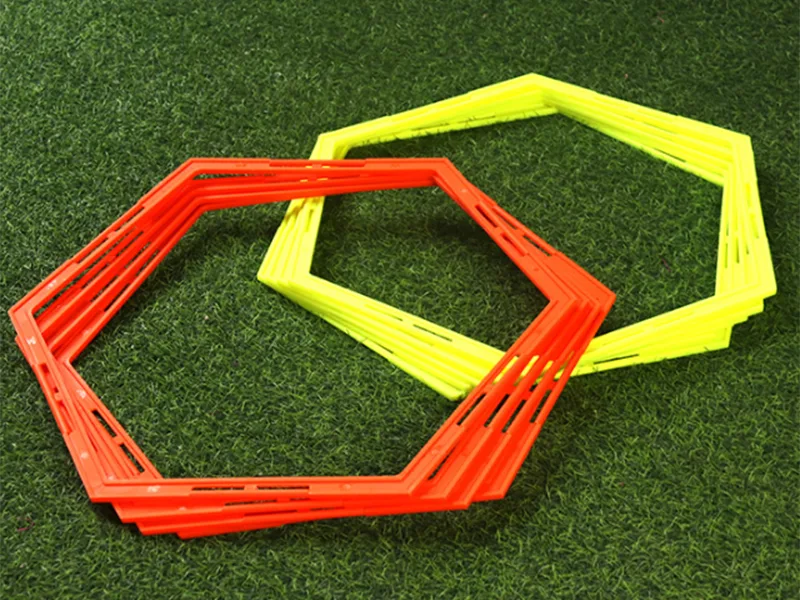
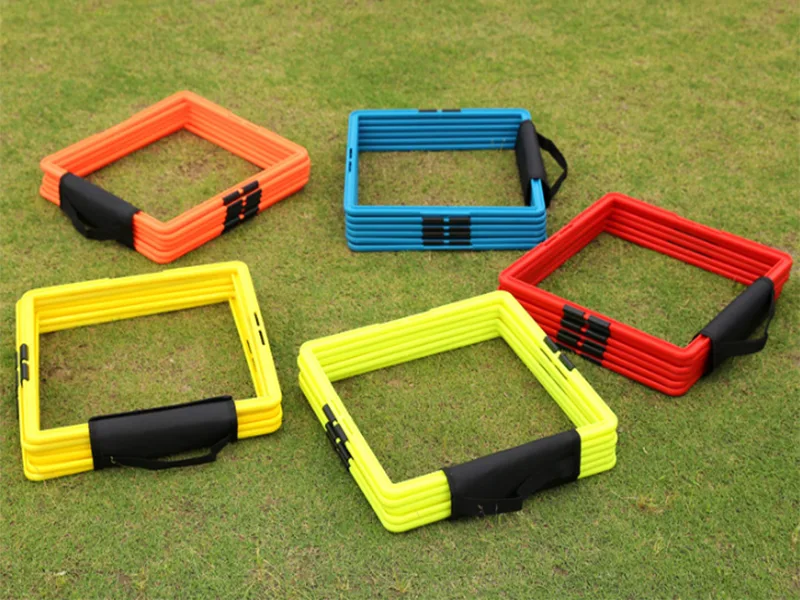
The material resists compression and cracking, so repeated stepping and jumping don't flatten the edges. The coloring is an eco-friendly process that holds up under sun and rain — the rings don't yellow or go dull after a few weeks outdoors, which matters because faded rings are harder to see during fast drills. Edges are smooth and deburred, so they won't scratch skin or snag kit. The rings nest together for storage and lift with one hand, which sounds small but adds up when you're carrying gear to and from the pitch every day.
JINLANGTE backs this with 15 years of manufacturing experience, over 100 production staff, 3 inspection lines, and certifications including NSCC, GS, CE, CPSIA, ASTM, PROP, and BSCI. Every shipment comes with an inspection report and product photos. It's not the cheapest ring on the market, but it's built to last more than one season — which is usually where the cheaper options start costing more in replacements.
A: For individual training, 6 to 12 Agility Rings For Footwork And Movement Practic are enough for most footwork patterns. For a team session with multiple stations, 20 or more gives you flexibility. The rings are stackable and lightweight, so buying extra doesn't create a storage problem.
A: Yes. The flat PE rings sit securely on grass, artificial turf, rubberized gym floors, and most even surfaces. On very smooth indoor flooring, they may shift slightly during high-intensity lateral work, in which case a non-slip mat underneath helps.
A>It depends on the drill and the athlete. For quick-foot speed drills, place rings close enough that the athlete never fully extends the legs between steps — roughly 30 to 50 cm apart for most adults. For explosive bounds or change-of-direction work, wider spacing is appropriate. Start close and widen as the athlete improves.
A>Yes. The PE material is non-toxic and odorless, the edges are smooth, and the bright colors engage young learners. Supervision is recommended, as with any sports equipment, but the rings themselves are safe for school PE and youth club use.
A>Ten to fifteen minutes of focused, high-quality ring work is usually enough when done before or alongside sport-specific training. The goal is clean movement quality, not fatigue. Longer sessions tend to produce sloppy technique as the athlete tires, which defeats the purpose.
A>Absolutely. Basketball, rugby, tennis, boxing, and fitness conditioning all benefit from footwork and movement-pattern training. Any sport that requires quick feet, balance, or directional change can use rings effectively.
A>Wipe them with a damp cloth after outdoor use to remove dirt and grass stains. Avoid harsh chemicals or solvents, which can degrade the plastic or fade the color. Store them stacked indoors when not in use to preserve color brightness and prevent warping from extreme temperatures.