- 1. The Evolution of Officiating Communication
- 2. Core Technical Features of a Modern Referee Headset
- 3. How the Referee Headset Enhances On-Field Decision-Making
- 4. Applications Across Different Sports Disciplines
- 5. Ergonomic Design and Comfort for Extended Use
- 6. Durability and Reliability in Demanding Environments
1. The Evolution of Officiating Communication
The journey from hand signals and sideline shouts to sophisticated wireless communication systems reflects the broader technological transformation of sports. In the early days of organized competition, referees relied entirely on visual cues and vocal commands that were often drowned out by roaring crowds. The introduction of basic two-way radios in the latter half of the 20th century marked the first significant step toward coordinated officiating. However, these early devices were bulky, unreliable, and offered poor audio quality in noisy stadium environments.
Today, the Referee Headset represents the culmination of decades of innovation in audio engineering, wireless technology, and human factors design. Modern systems provide crystal-clear, lag-free communication that enables officials to share observations, confirm calls, and coordinate complex decisions in real time. The evolution from simple audio transmission to integrated communication ecosystems has fundamentally changed how officiating crews operate, particularly in sports where multiple officials must work in synchrony across large playing areas.
2. Core Technical Features of a Modern Referee Headset
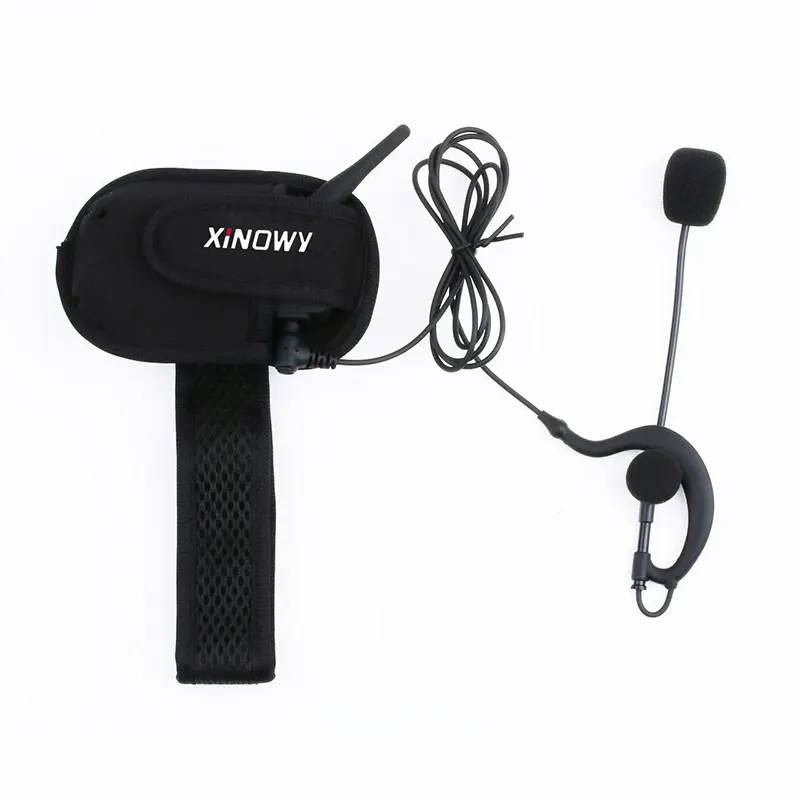
A high-performance Referee Headset is far more than a simple pair of headphones with a microphone. It is a precision-engineered communication tool designed to meet the unique demands of live sports officiating. The following technical attributes distinguish professional-grade systems from consumer audio equipment:
Noise-Canceling Technology
Advanced active noise cancellation filters out ambient crowd noise, wind, and stadium acoustics, ensuring that officials hear only the voices of their colleagues with exceptional clarity.
Low-Latency Wireless Transmission
Proprietary wireless protocols deliver audio with minimal delay, ensuring that communication remains perfectly synchronized with live action—critical for time-sensitive decisions.
Multi-Channel Communication
Modern systems support multiple simultaneous audio channels, allowing referees to communicate with video review teams, medical staff, and match commissioners without interference.
Weather-Resistant Construction
Built to withstand rain, sweat, and extreme temperatures, professional referee headsets feature sealed electronics and durable materials that perform reliably in any condition.
These technical capabilities combine to create a communication platform that is as reliable as it is versatile. Whether deployed in a rain-soaked football pitch or a sweltering indoor arena, the Referee Headset delivers consistent performance that officials can depend on.

3. How the Referee Headset Enhances On-Field Decision-Making
The most profound impact of the Referee Headset lies in its ability to improve the quality and accuracy of officiating decisions. In fast-paced sports, the difference between a correct call and a missed infraction often comes down to the quality of information available to the officiating crew. The headset enables a continuous flow of observations and perspectives that would be impossible through visual signals alone.
Consider a situation where the lead referee has an obstructed view of a critical play. Through the headset, an assistant referee positioned with a clear line of sight can instantly relay their observation, allowing the crew to arrive at the correct decision collectively. This collaborative approach reduces the likelihood of errors and ensures that the outcome of the game reflects the true course of play. Furthermore, the ability to communicate directly with video review officials means that referees can request and receive instant replay analysis without leaving their positions on the field.
The psychological benefits are equally significant. Officials who know they can rely on clear, immediate communication with their colleagues exhibit greater confidence in their decisions. This confidence translates into more authoritative game management, which in turn fosters respect from players, coaches, and spectators alike.
4. Applications Across Different Sports Disciplines
The versatility of the Referee Headset makes it suitable for a wide range of sports, each with its own unique officiating challenges. The following table illustrates how different sports leverage this technology:
| Sport | Primary Communication Need | Headset Application |
|---|---|---|
| Football (Soccer) | Offside calls, foul detection | Referee-to-assistant and VAR coordination |
| American Football | Complex rule enforcement | Referee-to-replay official and chain crew |
| Basketball | Fast-break officiating | Lead-trail referee coordination |
| Rugby | Scrum and ruck management | Referee-to-TMO (Television Match Official) |
| Tennis | Line call verification | Chair umpire-to-line judges |
| Cricket | LBW and run-out decisions | On-field umpire-to-third umpire |
Each sport presents distinct communication requirements, but the underlying principle remains consistent: the Referee Headset enables officiating crews to function as a cohesive unit, regardless of the size of the playing area or the complexity of the rules involved.
5. Ergonomic Design and Comfort for Extended Use
Professional sports events can last several hours, and officials must remain mentally sharp and physically comfortable throughout. The ergonomic design of a modern Referee Headset is therefore as important as its technical performance. Manufacturers have invested significant research into understanding the physical demands placed on officials and designing headsets that minimize fatigue and discomfort.
Lightweight Construction
Advanced materials such as magnesium alloys and high-strength polymers reduce overall weight without compromising durability, allowing officials to wear the headset for extended periods without neck strain.
Adjustable Fit Systems
Multi-point adjustment mechanisms ensure a secure, personalized fit for officials of all head sizes, while memory foam ear cushions provide superior comfort and passive noise isolation.
Balanced Weight Distribution
Carefully engineered weight distribution prevents the headset from shifting during physical activity, ensuring that officials can run, turn, and gesture freely without distraction.
Moisture-Wicking Materials
Breathable, moisture-wicking materials on ear cushions and headbands keep officials comfortable even in hot, humid conditions, reducing sweat-related irritation.
These design considerations reflect a deep understanding of the officiating environment. A headset that causes discomfort or distraction is a liability, regardless of its technical capabilities. By prioritizing ergonomics, manufacturers ensure that officials can focus entirely on the game.
6. Durability and Reliability in Demanding Environments
The Referee Headset must withstand conditions that would quickly destroy consumer-grade electronics. From torrential downpours to extreme heat, from accidental drops to constant handling, the operating environment for officiating equipment is unforgiving. Manufacturers address these challenges through rigorous design and testing protocols.
Durable construction begins with the selection of materials that resist impact, abrasion, and corrosion. Reinforced cable connections, sealed battery compartments, and ruggedized housings protect sensitive electronics from moisture and physical damage. Many professional-grade headsets carry IP-rated weather resistance, ensuring reliable operation even in adverse weather conditions.
Reliability extends beyond physical durability to include consistent audio performance. Advanced digital signal processing maintains clear audio transmission even in environments with high electromagnetic interference, such as stadiums with extensive broadcast and lighting equipment. Redundant power systems and quick-swap battery designs ensure that communication remains uninterrupted throughout the event.
For sports organizations, the durability of officiating equipment translates directly into operational efficiency. Reliable headsets reduce the need for frequent replacements, minimize equipment-related delays, and ensure that officiating crews can perform at their best in every situation.
Many professional referee headset systems include auxiliary audio inputs that allow integration with stadium public address systems, broadcast feeds, or video review monitors. This feature enables officials to hear broadcast commentary or referee audio cues as needed.
Ready to elevate your officiating team's communication capabilities?
contact us